Wednesday, December 30, 2020

The 2020 Video Game Retrospective

In a year as historic and unprecedented as 2020, a year where I spent fully 10 months working from home, it’s safe to say I found plenty of time for coping mechanisms. Among other things, I found comfort in video games. I didn’t spend a lot of time writing about them, but I certainly spent a lot of time playing them. As a result, I finished more games in 2020 as a 32-year-old man than I ever have in my life. Whether or not that’s an accomplishment of any particular note is debatable, but it’s definitely going to give me plenty to write about, assuming I can manage to get through the gargantuan document this is likely to be.

Finished on January 1st, 2020 on PlayStation 4.

In the early days of 2020, well before I understood what this year would become, I continued a trend I’d started in 2019 by trying out more shooters, starting by finishing off the Wolfenstein reboot’s standalone DLC, Wolfenstein: The Old Blood, which takes place in an alternate-history 1946 directly prior to the prologue of that reboot. What I appreciate about the Wolfenstein series as a whole is that it focuses a lot on narrative. There’s always this emphasis on realism in terms of the setting but it’s married with fantastic (and sometimes ridiculous) science-fiction elements. The Old Blood is definitely more gameplay-centric than the base game, but at a tidy six hours or so, it was a very satisfying playthrough. The game’s second half reminded me a lot of Uncharted 2 in a way.

Finished on January 5th, 2020 on PlayStation 4.


At that point, I knew I was going to keep playing Wolfenstein and Doom games, but I still had the itch to play a shooter and didn’t have access to very many of them. I settled on Titanfall 2, since giant robots are amazing and I’d heard that it had a great single-player campaign. This turned out to be very true! The gunplay itself is very solid and feels satisfying, and a lot can be said for the joy of crunching around in the mechs themselves, which all feel very functionally different from each other. The real draw is that campaign, though, which is so tightly designed, paced, and executed. I would play through dozens of campaigns like this if they existed. The narrative itself is interesting, but the gameplay, including excellent first-person platforming, is what really sold the game for me. It’s not the kind of game I’d ever play multiplayer for, though, so even though I’m sure Apex Legends from the same developer is great, it would never scratch that same itch for me.

Finished on January 14th, 2020 on PlayStation 4.

My thirst for shooters temporarily sated, I decided to move on to something entirely different. You know, now that I think about it, it’s a crime I never spent a lot of time talking about Romancing SaGa 2 when I played through it in 2018, because it is this wonderful, bizarre Japanese RPG that for whatever reason I’d never played. I loved it enough that when Square-Enix decided to put out an official localization of Romancing SaGa 3, I jumped at the opportunity to play it as well. Although these games have a shiny veneer applied to them, it’s clear from the pixel art graphical style that they hail from the days of the SNES. There are some important differences between the two games, but it really boils down to assembling a team of characters you have to jump through some hoops and do quests to recruit. Each of these characters belongs to a general character class and could be human, could be a mermaid, could be some kind of elephant-man martial artist (seriously), and has their own set of strengths and weaknesses. What really makes the games so addictive to me is that so much about how your game will go is a mystery. Most of the battle system boils down to casting magic from various elemental schools and using abilities linked to different weapon types. Every time you use an ability, you have a chance to “spark” a different ability, at which point it is learned and you can use it going forward. You never know when this is going to happen, and the strength of the enemy you’re fighting directly correlates to how likely it will be that it does happen. Sometimes you might end up sparking a really powerful ability in the middle of a tough boss fight, securing your victory. On the other hand, you might spark that rare ability and still lose the fight, meaning you may never see it pop up again. It’s this mystery and tension that really makes the combat system work for me.


Finished on January 29th on PlayStation 4.
SaGa: Scarlet Grace was localized officially at the same time as Romancing SaGa 3 so of course I picked it up as well. It’s clear that a lot changed in the span of time between the two games (and I’ve never played any of the intervening titles (yet)) but a lot about the core gameplay is similar. Sparking as a mechanic is still intact, much to my joy, but the difficulty is dialed way up. Even routine combat encounters can result in a total party wipe. Conquering enemies is frequently much more about your strategy than your level, although the abilities you’ve learned are important as well. Some of the mystery surrounding mechanics is gone since the game shows you a rough list of how many abilities you have yet to learn, although it doesn’t name them until you’ve actually discovered them. The most important difference in the combat system comes in how turn order works, which is difficult to explain in only a few words. Suffice to say, defeating enemies in certain orders based on the projected turn order at the bottom of the screen makes encounters much more manageable and very addictive too.


Finished on February 4th, 2020 on PlayStation 4.
I’d had my eye on Thumper for a long time because I’m just a big rhythm game fan in general, but didn’t pull the trigger until early 2020. Despite reading a lot about the game, it ended up not being quite what I expected. I was initially quite turned off by its cold, otherworldly percussion. Because of the way the game is structured and its sheer speed, I felt like my twitch reflexes were being tested rather than my ability to keep a rhythm. The more I played it, though, the more I became addicted to it. I started hearing the clangs and clonks of the speedy beetle you piloted along the track in my sleep. As the later levels added in complexity, I felt myself anticipating what was going to come next instead of reacting to it. This helped me to understand what the game was about much more and ultimately really enjoy it. I was very impressed with myself that I managed to finish it because it was quite difficult, particularly in the last set of levels.

Finished on February 4th, 2020 on PlayStation 4.
FutureGrind is a bite-sized indie game that didn’t leave a huge impression on me now that I’m thinking about it at the end of the year. It feels like a marriage of Tony Hawk’s Pro Skater and Trials, which is a fun concept, but not necessarily my preferred genre of game. The game adds variety by providing you with a series of different bikes that function differently based on the sizes of the wheels and the color of the tracks you grind. I had some fun spinning around through the air trying not to fall to my death or get shocked, but only finished it because of how short the campaign was.

Finished on February 7th, 2020 on Xbox One.
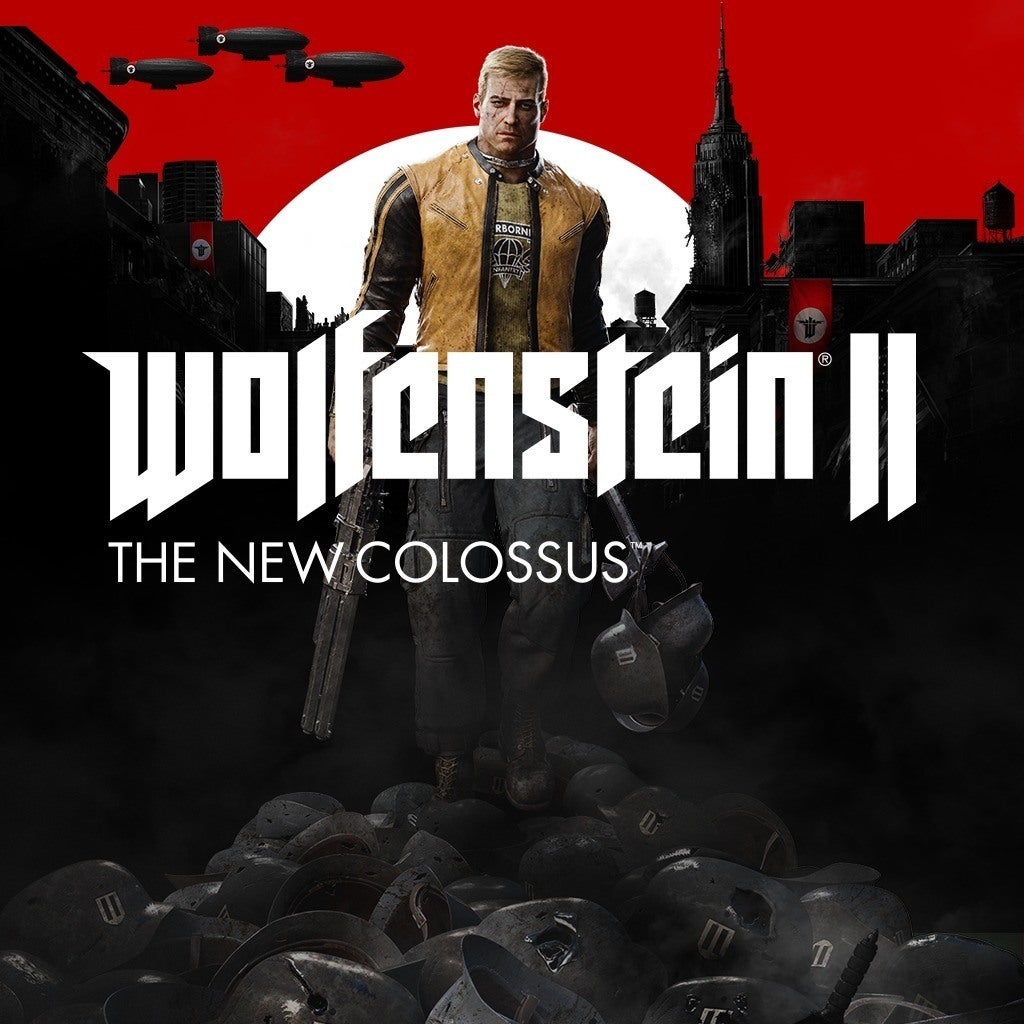
Wolfenstein II: The New Colossus ended my shooter hiatus and returned me to BJ Blazkowicz in a game that focuses just as much (if not more) on narrative as The New Order did, to great effect. The gameplay is as solid as ever, rooted as it is in old-school first-person shooter mechanics, but I primarily found myself being invested in BJ’s story, particularly when it came to his origins as a child of a Jewish mother and abusive non-Jewish father. There are some great scenes concerning his childhood and how he comes to terms with that, but this is also a Wolfenstein game, so we have to have some robots, and some decapitated heads grafted onto robot bodies too. It’s always good to strike a balance.


Finished on Feburary 7th, 8th, 11th, 12th, 13th, 16th,
April 3rd, and June 19th sequentially on PlayStation 4.

It feels like I play through a whole pile of Mega Man games just about every other year, and 2020 definitely didn’t fail to deliver on that front. To be fair, I’d been meaning to play through the Mega Man X games I’d missed for many years, but had never gotten around to it because of the horror stories I’d heard from basically everyone. Well, 2020 seemed to be the right year to finally give that a shot. I started by replaying Mega Man X, which is essentially just a perfect action game. I made sure to play it to completion this time, including acquiring the mysterious Hadoken ability that I used approximately one time. I also wrote a 100-word review of this game and all of the MMX titles following, which I’ll link to as we go. 


I had less clear memories of Mega Man X2, even though I definitely played through it as a kid. It was the first in the X series to add an air-dash and many of its combat abilities centered around traversal as well, but it wasn’t as memorable for me as the first game, as I mentioned in my brief review.


Mega Man X3 is noticeably tougher than the first two games and I found I didn’t enjoy it quite as much as I claimed to as a kid, even though it’s still really solid. I didn’t love fighting forced mid-stage mini-bosses that hop around to different stages and had a tough time with the final boss. Review here.


Finished on February 11th, 2020 on Nintendo Switch.
I took a brief break from my Mega Man X marathon to play through Sayonara Wild Hearts twice in a single day. It’s one of those exceedingly rare games that I wanted to play again from the very beginning as soon as the credits rolled. It’s a very simple game but is executed perfectly from the very beginning. The gameplay essentially just boils down to “auto-running with rhythm elements.” It’s definitely not a full-blown rhythm game, but the music is integral to the experience. It feels like you’re playing through a catchy pop album while running, jumping, flying through the air, having sword fights, and hurtling through space. I absolutely loved it.


Mega Man X4 is the first game of the series on PlayStation and also the game I’d played most recently prior to replaying it on the Legacy Collection. When I last played it, I committed the cardinal sin of only playing through the game as X, so I made up for that by also playing Zero during my replay. I quite enjoyed it, although something about it just feels more sluggish in comparison to the classic SNES games, and as a big fan of Mega Man Zero, I feel like Zero feels more fluid to play there on the Game Boy Advance. Review here.


Mega Man X5 was my first foray into uncharted territory. I highly suspected I wasn’t going to like the game, but I wanted to play it (and the following titles) just so I could have had the experience of doing so. I’ll admit the core gameplay is solid, but the level design is atrocious and some of the mechanics introduced in this title are totally unnecessary and annoying. I never wanted to play another auto-scrolling level again after this game, but more were coming… Review here.


Mega Man X6 is pretty much just more of the same from the previous game, with more auto-scrolling nonsense, more of the terrible virus mechanic, more annoying reploids to rescue, and okay, some of the weapons are better. There’s also a weird time limit inherent to the level structure that makes things confusing and irritating. Review here.


Finished on February 22nd, 2020 on PlayStation 4.
I think I really started thinking about the pandemic as an opportunity for me to clear out the Gaming Closet while stuck at home. Even as of this writing, there are a lot of classics I still haven’t played, but quite a bit less of them now than at the start of the year. One example is Castlevania: Rondo of Blood, which I primarily played because it was included in a double-pack with Symphony of the Night, which I’ll discuss a little later. Rondo took me a bit off guard with how difficult it is. I was curious about this game as a precursor to more contemporary games like Dark Souls, and I could see how there is some element of being conscious of how Richter gets locked into animations built into the game’s combat. It does really feel sluggish and dated by today’s standards, though, even though I really appreciate the aesthetic and especially the music. Also, Maria is a lot more fun to play and can’t say enough about tossing birds as a means of attack. I wouldn’t have considered the game complete unless I defeated Dracula with Richter though, so I did just that--after completing with Maria, of course.

Finished on February 25h, 2020 on PlayStation 4.


Truthfully, I have no idea what made me decide to revisit Prey, other than in some obligation toward my backlog of unfinished games. It could have been because I’d read something about it at the time, but it’s hard to say. I’m glad I did, though, because although the latter half of the game is extremely frustrating, a lot of it is very interesting and spooky. If not for the insanely unbalanced breakout of aliens in the final stages of the game, I think I would have really enjoyed it the whole way through. 


Finished on February 26th, 2020 on Nintendo Switch.


Speaking of classics, I bought Collection of Mana for the sole intent of playing an official localization of Seiken Densetsu 3 (which is now called Trials of Mana) that I have completed two or three times already. More on how that went later, but I started right from the beginning by playing through Final Fantasy Adventure, the very first Mana game. It’s obviously extremely dated by today’s standards, but it mostly holds up for me because of the good variety of weapons you can hack away at enemies with, even if most boss fights are primarily just mashing buttons. What really soured the experience for me was a game-breaking bug (or oversight?) I encountered about halfway through where you can permanently lock yourself into a room with no means of escape. I hadn’t read up on it beforehand so I had no idea it was coming and fell right into the game’s unintentional trap as I ran out of keys at a crucial time. The second time through, I aggressively bought keys at every opportunity.

Finished on March 3rd, 2020 on PlayStation 4.


Castlevania: Symphony of the Night is really the game I’d always wanted to play because it’s such an important and influential game to a whole genre that followed after it. (Sidenote: I still haven’t played Super Metroid; maybe I’ll fix that in 2021.) I’m happy to report that it mostly lived up to the hype. There was much less friction in playing it compared to Rondo of Blood and I found that I really enjoyed the fighting game style special moves to cast Alucard’s spells. The exploration, opening of shortcuts, and collection of items is all just as good in dozens of games influenced by this title. I’m glad I got to play one of the originals.


Finished on March 11th, 2020 on PlayStation 4.


Control was another game I’d put off playing for awhile (like Prey) because I’d watched a lot of it being played already and wasn’t ready to jump in right after having done so. I really dug the creepy atmosphere, art direction,and ambiguous plot of the game, but I have to admit it didn’t stick with me as much as some other games I played in the year. I will say flying around and hurling objects at enemies telekinetically is always really satisfying.


Finished on March 18th, 2020 on PlayStation 4.

I half expect that I was putting off finishing my
Mega Man X marathon during this time because just about every game during this period is a game I’d been previously putting off playing. Super Robot Wars V is another such example because I know I’d owned it for a few months at that point. I love the ridiculously over-the-top animations and strategy gameplay of these games, but unlike Moon Dwellers, which I’d played most recently, SRW V was extremely easy. I too often felt like I was mostly just going through the motions, so the novelty of tactical giant robot combat really fell off. From what I’ve heard, main series games tend to be pretty easy and Banpresto saves the difficulty for games featuring only original characters. Disappointing but understandable, I guess.


Finished on March 22nd, 2020 on PlayStation 4.


Speaking of finishing things I’d been putting off, the next game I finished was Resident Evil, specifically the remaster of the original title. Forced perspective camera angles aside, I found I really enjoyed it! The combat is incredibly basic, but even with dated visuals, the game manages to create a suitably creepy atmosphere and features some great environments and puzzles, all primarily within one mansion. I was determined to continue through the series from here, but it would take me quite some time before I did.


Finished on March 29th, 2020 on PlayStation 4.

Patapon Remastered
is a bit of a wildcard in my list because I just happened to see it on sale and wanted to play it--actually, you know what, it’s not even that much of a wildcard because I wanted to play it because I never finished the PSP original, despite really enjoying it. I used to be much less motivated to finish games, so I came back in and rectified that. It didn’t strike me as particularly different from the original, but I found that I was so much more patient with the level of grinding required to progress against some of the tougher bosses. Additionally, I just love the idea of a rhythm-driven real-time strategy game and I feel Patapon tackles the concept really well. I may finally get back into Patapon 2 one of these days.


Finished on March 30th, 2020 on PlayStation 4.


The final (for now) game on my Backlog Tour was Undertale, which I think I may have subconsciously avoided due to the tremendous hype surrounding it. I shouldn’t have though, because it’s fantastic. The humor and writing are sharp and the music is alarmingly good, consistently. I thought it might be boring going the Pacifist route, but it ultimately felt like the right way to play the game and there was never a point where the game didn’t make that fun, since every enemy is a puzzle. It reminded me a lot of the demon negotiations in the earlier Shin Megami Tensei games, which I wouldn’t be at all surprised to learn were an influence.


Finished on April 1st, 2020 on PlayStation 4.

A lot of folks felt Doom Eternal fell short of greatness, but I found I really enjoyed it despite the difficulty being more brutal than Doom (2016). I will admit I found myself in many more frustrating combat scenarios, but the gameplay is just as much of a blast as ever and the heavy metal soundtrack goes harder than just about any other game you could name. I forgot to mention that the same musician also worked on the Wolfenstein games, but he really put his mark on Doom, despite some recording drama I won’t go into here.


Finally, long after having finished Mega Man X6 and a lot of stalling, I finished Mega Man X7. I’ve gotta tell you, there’re a lot of great reasons why I put it off for as long as I did, but it mostly just boils down to Mega Man X7 being a truly awful game that I had to force myself to finish. If I weren’t such a stickler about committing to finishing games as often as possible, I certainly wouldn’t have soldiered on. I could write multiple paragraphs about why this game is bad, but it doesn’t deserve the attention. Feel free to read my 100-word review here, though.


Finished on April 7th, 2020 on PlayStation 4.


I spent a decent amount of time with the PlayStation Vita, but I was kind of a late adopter, so I missed out on some of its best titles, including, oddly enough, Danganronpa: Trigger-Happy Havoc. It’s interesting because it’s the type of game that’s exactly up my alley, especially as a huge Ace Attorney fan. It ended up not being quite what I expected and I was initially put off by its hamfisted writing and archetypical characters, but the more I committed to it, the more I started to think of the whole thing as a bit. I started looking forward to every ridiculous twist and felt more and more invested in figuring out the mystery behind everything. What I didn’t love, though, was almost any of the minigames you play during class trials. Man, those are just awful.


Finished on April 11th, 2020 on Nintendo Switch.
It occurs to me that I have now played and finished three different versions of Secret of Mana in my life, and I may have played through at least one of them twice. I played through the original SNES version (and wrote about it in 2014), the totally unnecessary and inadequate PS4 remake in 2018, and then the 2D version again on Switch in 2020. I still really like this game, despite its limitations. The music is wonderful, the graphics are lovely to look at, and although the combat has problems, I’m still into it, especially since you can unlock different unique charge attacks for each weapon. I also still really like how they can be used for different types of platforming.

Finished on April 13th, 2020 on PlayStation 4.


I wasn’t expecting much from The Surge since it seemed pretty clear it was a sci-fi Dark Souls knockoff, which, to be honest, isn’t entirely untrue. On the other hand, it feels pretty great to play and has enough mechanics to feel distinct. Tearing the limbs off robotic enemies and using those parts to create your own gear is a really neat idea and works great in practice. It adds a layer of customization to the game because the gear you create is one of the principle ways you create a build for your character. Each type of gear has its own strengths and weaknesses and may or may not synergize with certain weapons. You can also slot in different implants that boost stats or serve as refillable consumable items.


Finished on April 27th, 2020 on PlayStation 4.
As so often is the case for my gaming habits, when I play a game that makes an impression on me, I go down a rabbit hole of playing games that it influenced (or in this, was influenced by). For that reason, the next game I finished was Dark Souls Remastered, and it was for the first time. I’d played Dark Souls on PC many years ago but never made it much farther than the first boss. If we want to be totally accurate here, Bloodborne is really responsible for igniting my interest in Soulslikes, but it took me awhile to get to a point where I was playing more of them. There’s not much I can say about Dark Souls that hasn’t already been said, but man, it’s great. I loved it in ways that I wasn’t expecting. It felt a lot different from Bloodborne primarily because of how effective shields are and how effective magic can be. For that reason, it felt quite a bit easier, while still not at all lacking in bite.

Finished on April 30th, 2020 on Nintendo Switch.
Afterward, I decided to play something completely different and unrelated, which was Grandia, a classic Japanese RPG favorite. My original plan was to follow up with Grandia II, which I’d also received as part of a bundle, but I ran out of steam. Grandia was a great, comforting game to return to, even if some of the dungeon-crawling was more tedious than I remembered. The charming characters, dialogue, and music all really took me back to my childhood.


Finished on May 4th, 2020 on Nintendo Switch.
My original plan when I’d purchased Collection of Mana was to play all three games before the Trials of Mana remake came out, but, well, it came out shortly after I finished Secret of Mana, so I thought it made more sense to just play the remake since I’ve played Seiken Densetsu 3 multiple times already. I’m happy to report that Trials of Mana works tremendously better than the similar Secret of Mana remake. It’s very loyal to the original while adding new elements to flesh out the combat system, which is just about exactly what I was looking for but didn’t get in Secret of Mana. It evidently sold really well, so I’m looking forward to similar remakes for other Mana games going forward.


Finished on May 10th, 2020 on Nintendo Switch.


I’d had my eye on Wonder Boy: The Dragon’s Trap for some time because it has a gorgeous art style and I like playing updated versions of classic games. I played through the majority of the game over the course of a few days and found I quite enjoyed morphing into different animal creatures and to conquer different enemies. I didn’t like as much the sections of the game where I was stuck in a specific animal form for long periods of time. It seems to me like the game would have benefited from being able to freely switch much earlier on, because it felt much more satisfying once that became an option.


Finished on May 14th, 2020 on Xbox One.


I was lucky that The Surge 2 popped up on Xbox Gamepass because I was interested in playing it but probably wouldn’t have purchased it otherwise. I would have been missing out, too, because it’s a great Soulslike game in the vein of the original but with a lot of quality-of-life improvements. There’s a ton of variety in the combat and builds, even though the game is pretty lacking in boss variety. 


Finished on May 27th, 2020 on PlayStation 4.


Back to clearing out the backlog, I revisited a game that had been stuck there for several years, 2010’s Limbo, a creepy monochromatic puzzle platformer. You know, it’s not really my genre, which is probably why It took me so long to finish, but it felt pretty satisfying to finish and I still really dig the art direction and the puzzles themselves are well-designed.


Finished on May 28th, 2020 on PlayStation 4.
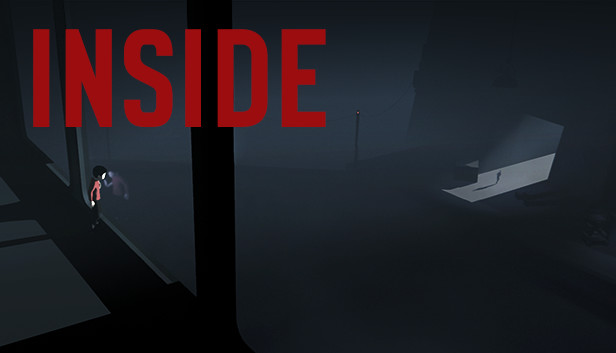
The real reason I wanted to revisit Limbo is because I wanted to do so before playing Inside, which was a total mystery to me, but seems to receive near-constant praise. After having finished it (in about three hours), I can definitely see why. I’m hesitant to spoil the surprise myself, even after a few years after its release, but one thing I can say about it compared to Limbo is that it has this forward thrust that made me feel motivated to keep playing the entire time, whereas it was pretty easy for me to lose interest after a few minutes with Limbo.


Finished on May 29th, 2020 on PlayStation 4.


I have to say, I felt pretty proud of myself when I finished Nioh because, at the time, I felt pretty confident in saying it was the hardest game I’d ever played. It’s possible a different game deserves that title now, but more on that later. I purchased Nioh on release after reading a lot about it prior to launch and thinking it just looked incredible. This was in 2017, well before I’d played any really difficult games. This was even before I’d played Hollow Knight, which really deserves the credit for making me better at tough action games. So, when I first played it, I really bounced off of it because I could barely make it through the very first level of the game. Seriously, I beat the first boss, the one that barely counts as a boss, and gave up in disgust on that first island. I found that when I jumped into it this time, I breezed through that introductory level and found I was having a much easier time with it. Sure, I hit many brick walls, but I buckled down, studied boss patterns, did research, and I got better--and I made it through. It’s a fantastic game too, only let down by some repetitiveness in the later portions of the game.


Finished on June 5th, 2020 on PlayStation 4.

After the brutal difficulty of Nioh, I felt ready to play something much more relaxing, so I finished Danganronpa 2: Goodbye Despair, which had come in a combo pack with the first game. I’m not sure I necessarily resonated with the characters in this one as much, but the wackiness, twists, and mystery of the game still kept me invested. There are definitely some problematic cultural elements in both of these games, but I can mostly overlook them if I focus on the mysteries, and because I didn’t mention it in the blurb on the first game, some killer music.


After that, I finally finished Mega Man X8, which is not a criticism of the quality of that game, exactly, but more a commentary on just how much I hated Mega Man X7. I just wasn’t ready to play more Mega Man after that, so I really put off playing X8. It’s actually not bad, though. Capcom must have really took criticism of X7 to heart and made a solid 2.5D action platformer, but it still doesn’t quite reach the quality of the earlier games. My review of this one can be found here.


Finished on June 19th, 2020 on Nintendo Switch.
Although I’ve really followed the Pokemon series since the very beginning, I’ve lost interest somewhat since Sun and Moon, which didn’t totally grab me. Even so, I knew I’d eventually want to try out the new game, which I did with Pokemon Shield. It has its problems, none of which really have anything to do with not featuring the full roster of Pokemon, but I found I enjoyed just playing through the base game just fine. I also really dug the music a lot. I do miss all the old mechanics that they seem to just throw away every generation. I’d appreciate nods to Mega-Evolution, Z-moves, and that kind of thing.


Finished on July 16th, 2020 on PlayStation 4.
I fully intended to play Divinity: Original Sin 2 Enhanced Edition directly after replaying the first game on PS4, but after spending 70 hours on that game back in 2019, I was feeling pretty burned out. I finally returned to it in a year that is apparently designed specifically to return to backlogged games and quite enjoyed it! At the end of the day, it didn’t wow me as much as I was led to believe it would. Although the battle system is very clever, it’s glacially-paced. Even routine combat encounters take a long time, and the writing for the characters and story is good, but not great like in Pillars of Eternity. I don’t totally buy the comparisons saying Divinity is vastly superior. It’s different and also extremely good, but I enjoy them both differently.


Finished on July 23rd, 2020 on PlayStation 4.
Because I wasn’t already exhausted enough by that gargantuan game, I then played The Last of Us Part II, because yes, I just wanted to be privy to the discourse at the time. I’m part of the problem. It’s one of the best looking games I’ve ever played and has extremely well-designed and sympathetic characters that… make really awful decisions that don’t reflect their characters whatsoever. I also don’t love the gameplay and felt pretty bogged down by the constant gratuitous violence (like, do I need to see Ellie’s throat ripped out every time I make a bad decision?). It’s a shame because there’s a lot about the game that I really love, but I just greatly dislike the entire narrative thrust of the game.


Finished on July 25th, 2020 on Nintendo Switch.
I’d put off playing
Xenoblade Chronicles mostly just because it was really difficult to get a copy of it for either Wii or 3DS for the longest time, so when the definitive edition came out, it seemed like the perfect time to pick it up. It wasn’t the essential Nintendo RPG I had been led to believe it would be, but I did have a lot of fun with it. I can’t imagine spending hundreds of hours on all those inane side quests like some have, but the battle system is amusing enough, the graphics are solid, and the music is pretty great. I also will have “Riki likes fighting easy monsters” stuck in my head for the rest of my life.


Finished on August 3rd, 2020 on Nintendo Switch.


I skipped several games in the Paper Mario series after not finishing Super Paper Mario on the Wii mostly because I’d heard they weren’t great, but I wanted to give Paper Mario: The Origami King a try because dang it, I want to believe in that series again. It ended up being a mixed bag. I really didn’t dig the battle system at all, at least as far as normal combat encounters go. Boss encounters aren’t bad, but I can pretty comfortably dismiss the gameplay as below average overall. However, the story is really charming, and so are the characters. On top of that, the music is absolutely wonderful so I didn’t mind playing through it at all.


Finished on August 16th, 2020 on PlayStation 4.
Ghost of Tsushima strikes me as an Assassin’s Creed game set in Feudal Japan, except it’s not developed by Ubisoft. In this case, the developer is Sucker Punch, known primarily for the Infamous series on PS3. Those games were honestly great and so is Ghost of Tsushima, even if it doesn’t necessarily stand out among other open-world games. The setting is picture-perfect, the characters sympathetic, and the gameplay is solid. It’s just hard to think of anything about it, in particular, that’s remarkable. If you’re looking for an open-world game set in feudal Japan, this is exactly that, and it’s exactly what you’d expect.


Finished on September 6th, 2020 on Xbox One.


I didn’t play a ton of Xbox Gamepass games this year, but a lot of them were sequels to games I’d already played on other platforms. One exception is Double Kick Heroes, a super charming indie rhythm game in which you kill a bunch of zombies from the back of a truck using guns powered by a double kick drum. The concept is hilarious and not only am I a sucker for rhythm games, but I love heavy metal as well, so this game was right up my alley. It got surprisingly challenging near the end, too.


Finished on September 29th, 2020 on PlayStation 4.

Much has been said about Marvel’s Avengers and just how disappointing a game it became. It’s definitely a game that was a victim of pre-release hype but also of a crisis of identity. It initially feels like a single-player narrative game in the vein of Spider-Man, but soon enough, that content dries up and you’re left with a bland looter-RPG in the vein of Destiny, but with less content. It’s a shame, too, because the narrative part of the game is actually really good. Kamala Khan is a fantastic protagonist. I would definitely consider returning to the game if more legitimate story content was added.


Finished on October 6th, 2020 on Xbox One.


I decided maybe a little too late into October that it was going to be a Spooky Month in which I played Spooky Games. Of course, I was already invested in one game on which I spent a lot of time during the month that I’ll talk about it in a minute, but the first game I completed in October was definitely on-brand and that was The Dark Pictures: Man of Medan. Surprisingly, this was the first game I’d played from Supermassive and although I was skeptical of it at first, I came to really enjoy it. I miss narrative games in the style of Telltale and I love the pulpy horror movie vibe of this game, even if the tension of having to replay content if I make a mistake (and get a character killed) is always there. But I guess that’s part of the point.


Finished on October 18th, 2020 on PlayStation 4.

The next game I finished in October, once over half the month was over was Yakuza Kiwami 2, a game in a series I really adore that I had a hard time getting into at first. I had to really come to terms with the fact that in various ways, Yakuza 0 and Yakuza Kiwami were really updated to take advantage of modern technology and advances from later in the series. Even though Kiwami 2 features a lot of quality-of-life updates as well, it doesn’t initially feel quite as smooth during combat. This is for a series that I don’t consider to have stellar combat in the first place, so it was definitely a hurdle I had to deal with. Gripes aside, I love the melodramatic plots of these games and wandering around Kamurocho talking to people, playing minigames, and getting into hijinks. I’ll definitely play the whole series, bells-and-whistles or not.


Finished on October 22nd, 2020 on PlayStation 4.
I got back on track for Spooky Month with Resident Evil 2, the remake for PS4. Like most horror/survival games, I had never played this or the original in my life. I found that I really loved it. Obviously, it was significantly more polished and modern than the first game that I’d played much earlier in the year, but I felt pretty connected to the two characters as well, although Claire gets the edge there. I really enjoyed the atmosphere and resource management of RE2, so I wonder how I’ll feel about other entries in the series that really dial that aspect back.


Finished on October 23rd, 2020 on PlayStation 4.

Since I’d played
Man of Medan and enjoyed it, I decided I’d work backward and also play Until Dawn, which I’d owned on PlayStation Plus for some time. Man of Medan was pretty good, but it’s clear Supermassive was working with a larger budget on this game, with its larger cast of characters and relatively well-known actors. It was a huge pleasure to see my man Bret Dalton (Grant Ward, of Agents of Shield) playing one of the principal characters. I also felt a bit more connected to the characters in general, even though I didn’t feel that way initially. It follows the classic horror movie trope of populating an area with tremendously unlikeable teens, but after spending some time with them, I felt I got to know them pretty well. Okay, maybe not Jessica and Matthew.


Finished on October 31st, 2020 on PlayStation 4.
The final game I completed at the very end of October was The Evil Within, a brutally tough action/survival horror game created by who I read is the original director of Resident Evil. Reception online seemed to be pretty mixed to this one, but I enjoyed it for the most part. Some of the levels were really frustrating to the point of being unfun, but the atmosphere and creepiness of the enemies in the game was definitely on-point.


Finished on November 16th, 2020 on PlayStation 5.

The very first PS5 game I finished was, of course, Astro’s Playroom, a glorified tech demo that has no business being as good as it is. It really does its job at showing off the features of the new PS5 controller and feels incredible to play just in general. It also has some killer music that still occasionally gets stuck in my head. I would love to see a full-fledged Astro game at some point in the future.


Finished on November 27th, 2020 on PlayStation 4.


Although I’ve definitely played more than enough games this year, if there’s any reason it slowed down a tad in November, it’s because I was playing The Legend of Heroes: Trails of Cold Steel IV, which took me something like 150 hours to finish. Falcom wasn’t messing around with this one, making sure to feature just about every character you could imagine from previous games as playable characters at one point or another. I did all the side quests and got a good chunk of the trophies, so that’s probably a big part of why it took me so long, but still, that is a very long video game. I wouldn’t mind if future entries (if they even get localized) cut down on the length a bit, but I can’t imagine that happening. Apparently, the next one has three separate protagonists.


Finished on November 29th, 2020 on PlayStation 4.
I’m not 100% sure why I decided to play Mortal Kombat 11, but I imagine it must have occurred in much the same way I played Mortal Kombat X. I like fighting games, but don’t like playing hundreds of random multiplayer matches. Mortal Kombat’s extensive single-player story modes really draw me in, even if I don’t stick around after they’re done. I had a lot of fun with this one, enough that I even played through the Aftermath DLC. It’s all good, ridiculous fun, even if the gratuitous gore and violence are way over the top in a way that stops being fun.


Finished on December 6th, 2020 on PlayStation 5.


Because 2020 for me is the year of Souls and Soulslikes, I also finished Demon’s Souls in the last month of the year! I absolutely loved it, of course, in much the same ways I loved Dark Souls, but the snazzy new graphics and haptic feedback on the controller are really just icing on the cake. Demon’s Souls has everything I’m looking for in these games, including the mystery, the obtuse mechanics, and the satisfying animation-locked combat. A couple of bosses were pretty challenging, but it wasn’t too rough overall. One of these days I’m going to rank the difficulty of these games as I experienced them. Demon’s Souls would be on the lower end of the list, I think.


Finished on December 15th, 2020 on PlayStation 5.


As I sat down to write this list, the final game I had finished this year was Marvel’s Spider-Man Remastered, which is an absolute joy to play on PlayStation 5. The game looked great on PS4, but it’s gorgeous on this new platform, and with a guaranteed 60 frames per second, it’s never felt as good. Aside from that, it’s just a really fantastic open-world game that never feels like it’s wasting your time. The main story is brisk but even the collectibles and side quests don’t take a long time individually. It always feels like you’re never far away from your next task, which feels great. This is a big part of why I felt motivated to play through all of the game's DLC and unlock every trophy. It helps that the combat is incredibly satisfying and just fun to watch in general. I felt like this was a fantastic way to close out the year.


Until I surprised myself by beating Sekiro: Shadows Die Twice on December the 28th. 


Finished on December 28th, 2020 on PlayStation 4.

Just to give you an idea of how much I struggled with this game, I originally started it in August right after having finished Ghost of Tsushima. I spent probably a month stuck on Lady Butterfly, an early tough boss, until I shelved the game for quite a while. I came back to it in December, knocked out a few mini-bosses, and picked up a lot of steam until I hit Genichiro, where I felt like I had to completely relearn how to play the game. Occasional deflecting was getting me by up to that point but it was this fight that made me learn how to do it consistently. After many, many tries, I made it through, now confident that I had what it took to finish the rest of the game. After that, I hit another wall with Guardian Ape, which forced me to learn how to fight a huge, aggressive Dark Souls-style boss in a game that ultimately doesn’t function all that much like Dark Souls. The rest of the game went smoothly, although I did struggle a tad with True Corrupted Monk in Fountainhead Palace, but the real test came when I hit the final boss, and I realized I was really going to have to put everything I’d learned in practice I’d conquered some bosses by relying on Flame Vent + Projected Force or aggressive Double Ichimonji usage, but this time, I just had to deflect and do it consistently. I tried falling back on some of my tools but ended up settling on a pretty simple heavy-deflect strategy to make it through. And I did. I beat Sekiro: Shadows Die Twice, the hardest game I have ever finished in my life.


One has to wonder why I’ve played so many difficult, stressful games in a year that’s been plenty stressful enough on its own, and I don’t have a perfect answer to that question. I think I’ve been put in a position where I’m stuck at home, feeling unmoored and disconnected from others, and maybe conquering these really difficult games filled me with a sense of accomplishment and validation that is lacking elsewhere in my life. I’ve used games to cope and relax too, of course, but finishing 57 games in one year is a lot even for someone with more free time than me. It could be argued that I could definitely channel my time into more productive things, but these days, I’ll take my joy where I can get it.


Thursday, July 9, 2020

The Price of Divinity


Let's dust this thing off. I need some writing practice anyway.

It's difficult to even begin talking about what this year has been. Seven months in and it feels like ten years have passed in that span of time. 2020 will go down as a historic year assuming we arrive as a country and planet at the other end of it. But this isn't a blog about world events or social issues. This is a blog about inane bullshit and video game minutiae, so let's get down to business here.

So, I mentioned briefly in my last (of many) Final Fantasy XIV entries that I was "stubbornly replaying" Divinity: Original Sin on PS4 after having played it originally on PC in 2014. I ended up going the distance on that and finished up the Enhanced Edition with the expectation that it would refresh my memory before moving on to Divinity: Original Sin 2 (also an Enhanced Edition, apparently). Well, I didn't move on right away, because after playing through D:OS1, even after a span of multiple years from playing the original version, I felt pretty burned out.

It was definitely a different experience than my first run-through not only because I was experiencing the enhancements for the first time, but because it was the first time I'd played it solo. I have to admit I really missed the camaraderie and cooperate strategizing that so characterized my initial experience with the game. On the other hand, I really enjoyed having a couple more choices for party members, even though I never experimented much with the new rogue companion. I did greatly take advantage of Bairdotr, a new archer companion that my girlfriend and I affectionately dubbed "Bear Doctor," for obvious reasons.

The Expert Marksman set of skills in that game is devastatingly powerful and gives you an absurd degree of control that I found I quite enjoyed. I took great advantage of the Arrow Spray skill to one-shot a lot of bosses, too. I also have memories of playing the original version of the game in 2014 with Madora becoming an unkillable monster due to a combination of the Leech and Comeback Kid talents. I think even before the Enhanced Edition came out, they tweaked that. Before it was fixed, Madora would get massive healing from bleeding or making enemies bleed. This was easily exploited by using a Witchcraft skill that caused bleeding 100% of the time. Combine this with coming back to life after your first death and you have an almost impossible-to-kill warrior.

Divinity really lends itself to game-breaking strategies by nature of its very open-ended design. The Teleportation spell is an infamous tool that in the hands of a knowledgeable player could entirely transform a wide variety of encounters. Enemies could be isolated or bugged to the point that many otherwise difficult encounters could be trivialized. Based on what I've read, the Teleport spell was repeatedly tweaked to limit its power, but it's still incredibly strong even in Original Sin 2. Tough enemies can be isolated and encounters can be picked off in more bite-size chunks if the spell is managed properly.

It's clear that Larian Studios wanted to take steps to curb the power of crowd control, and did so in a clever way, but their steps resulted in some unforeseen consequences. In the first Orginal Sin, Action Points—which determined how far characters could move and what spells could be cast in a turn—were determined by a pair of stats. The total number of Action Points and the amount regenerated per turn could be modified by your character's build. In the sequel, this process has been standardized significantly. Across the board, all abilities and skills cost 1, 2, or 3 AP (with few exceptions) and all playable characters are standardized to have a maximum of 6 AP, but only regenerate 4 AP per turn. This cannot be modified through stats in any way, which can feel a little stifling when it was more than possible in the first game to attack five or six times in a single turn. It's not frequently possible to attack more than twice in Original Sin 2, which is disconcerting, especially in the early stages of the game.

The other major change in Original Sin 2 is the addition of Physical and Magic Armor, mitigation statistics that function as extra pools of HP for physical and magical damage. What's really important about the stats is that they entirely determine whether or not crowd control effects will be effective. This is a big change from the first game in which many fights were decided by opening with powerful knockdown effects and stuns. Now, fights are frequently determined by how effectively you can chew through that mitigation so you can land those crucial stuns and disables. What's frustrating about this is that it turns many fights into DPS races. Low-damage tanks function less effectively because their crowd control effects are pointless until enough damage has been done to get through their mitigation.

These two changes further slow down the pace of a battle system that was already pretty slow to begin with. It wasn't until many hours into the game that I really started to understand what I was doing wrong. After playing through the original game twice, I had a pretty firm idea of how that battle system worked. The ways it differs in the sequel really threw me off, resulting in many hours of feeling ineffective and frustrated. I'd spend an hour on a tough fight only to get slowly ground into the dust because I couldn't put out enough damage to get through the enemy's armor totals.

Suffice it to say that I have mixed feelings about these changes. I admire in spirit the idea of standardizing Action Points and even believe the division of physical and magic armor is particularly novel, but it's hard to ignore the effect these changes have on pacing. Talents like Torturer that allow some crowd control effects to ignore armor are helpful but don't entirely eliminate the problem. It begins to feel as if the only surefire way to be successful in encounters is to create a party full of characters geared primarily toward dealing as much damage as possible, which doesn't gel particularly well with my idea of an open-ended fantasy game. Sure, it's a lot of fun to slink around the outskirts of a battle as a rogue and blow people up, but it'd be nice to be useful as a lumbering stun-bot as well. In Original Sin 2, it's important for your tank to deal a lot of damage too.

Despite my gripes, Original Sin 2 is very fun when things are going your way. I've found that since I've made a point of ruthlessly mowing through every quest in sight and ensuring my levels are up to date, I've had a lot more fun overall. I just wish I had more fun when playing from behind.

Tuesday, December 31, 2019

The 2019 Video Game Retrospective

I almost always try to make an effort to recap my games of the year in some way. It all started in 2014 with a gargantuan post complete with hastily Photoshopped banners for each and every game I had finished that year. Looking back on that is really fun because it serves not only as a snapshot of the games I played that year, but of what was going on in my life too. Because I tend to spend most of my free time on games, reviewing those games at the end of year serves as an apt encapsulation of my thoughts and feelings throughout that year. The past two of these retrospectives have been much more pared down in nature, serving as a list of statistics more than anything else. What this post serves to do is return in some small way to the vision I had of what I wanted these retrospectives to be in 2014.


Finished January 6th on PlayStation 4.
First up on the list is Iconoclasts, an indie Metroidvania that, as of this writing, I'd almost forgotten I'd even played! Unlike previous years, I haven't been writing about and assessing games I play obsessively as I go, so it seems more common for games to fall out of my subconscious. That's not to say this is a bad game, though–in fact, I really liked it a lot. It has simple but satisfying puzzles to solve, decent boss fights, and a colorful and attractive 2D art style. That last bit was what attracted me to the game in the first place but I stayed for the solid gameplay. If there is any weakness of Iconoclasts, it is simply that it doesn't seem to particularly excel in any area, which is no small part of why it didn't stick with me throughout the rest of the year.

Finished January 11th on Nintendo Switch.
Octopath Traveler is a game I sunk an ungodly number of hours into, primarily in 2018. I had initially abandoned it out of frustration because as has been noted in many areas of the internet, it is an overlong, repetitive game that squanders a lot of the promise of its premise. However, it's also definitely a game not without merit. By the time I finished the nightmare boss rush at the very end of the game, I must admit to a great deal of satisfaction with it. The Bravely Default developers have a way of doing this with their games, where much of the time you spend on them feels mundane but eventually, a beleaguered satisfaction creeps in once your characters have become virtual gods. As usual, I'm a sucker for games in which stories cross over, so Octopath Traveler wasn't a hard sell for me. Unfortunately, the stories of Octopath's eight protagonists barely cross over at all. Here's hoping Octopath 2 or Dodecapath Traveler tackles this premise better.

Finished on January 22nd on PlayStation 4.
Persona 5: Dancing in Starlight definitely comes across as a holdover from the end of the previous year in which I finished both of the other Persona dancing games. There are three things that are true about me that make me the ideal audience for games like this: one, I absolutely love rhythm games and games in which music is central to the premise; two, as was mentioned only paragraphs above, I love crossovers–and there's plenty of crossover between Persona characters in these three games–and then; three, I'm a huge fan of Persona and have gamely plowed my way through every game and spinoff of that series. I don't think it's an exaggeration at this point for me to say I haven't missed a single one yet. More on that later. Suffice to say, all three of the Persona Dancing games are incredibly addictive not just because the gameplay itself is well designed and responsive, but because Shoji Meguro is a skilled composer and arranger who pens some of the most memorable music in video games.

Finished January 29th on PlayStation 4.
I had enjoyed Iconoclasts enough that it put me in the mood for games in a similar style. Looking back at it now, it really was responsible for a trend throughout this year of really embracing the Metroidvania genre, even if critics on the internet might prefer I not continue to fall back on that term. The first game I really jumped into was Hollow Knight, a game that grabbed me in minutes with how beautiful it looked and how responsively it controlled. I certainly wasn't prepared for the sheer scale and ambition of the game. When I first started it, I thought I might have finished it in 5-6 hours, but it ended up taking me more than 50–and I enjoyed every second of it. Every new area I uncovered was a new surprise and a delight, whether it be from getting good enough at the game that I can take down a tough boss barring my way or because I'd found a new traversal ability that allowed me to jump higher, to glide, or even to phase out of reality. Every encounter is challenging but never frustrating. Even when repeatedly vanquished by tough opponents, it was always clear what I could have done better. Much in the vein of a Dark Souls or Bloodborne, the most important experience you gain is just in becoming better at the game. Looking back at it now, the joy that I got from Hollow Knight was a big inspiration not only in trying other games within its genre, but in branching out to other very difficult but rewarding games.

Finished on February 11th on PlayStation 4.
This year wasn't the first time I'd played through and finished Evoland, a very short video game that bridges together a series of different genres from top-down action-adventure à la The Legend of Zelda to turn-based RPGs more in the vein of Final Fantasy and even a segment that directly channels Diablo II. Truth be told, I only played it again on PS4 because I was looking forward to playing Evoland II again, which is bundled in with this game in a collection and delivers on concepts explored by its predecessor in a much more satisfying and mature way. Unfortunately, I never actually ended up doing that! With the avalanche of games I tackled afterward, it seems unlikely I'll return to it at this point–which is sad, because although Evoland can be safely skipped over, Evoland II is an underrated gem that I've never had the opportunity to write about. Maybe one day.

Finished on February 17th on PlayStation 4.
Hollow Knight was almost a direct inspiration for trying Dead Cells, which I guess you could loosely describe as a Metroidvania, but it's definitely more of a hybrid roguelike since it features procedurally generated levels. Still, I found Dead Cells extremely addictive in almost entirely different ways from Hollow Knight. The challenge was still certainly there, but a large part of what made Dead Cells fun was the randomness inherent to finding weapons and abilities. Every run of Dead Cells is different and it's up to the player to make choices based on what weapons they happen to find. And like with any roguelike, every death contributes toward adding more variety to future runs. The pattern of repeatedly unlocking new things as I went gave the game a lot of longevity for me, even long after I'd beaten the final boss. There were always new weapons to uncover, alternate paths to explore, and even traversal abilities to unlock, the one weird Metroidvania quirk that differentiated it for me from a lot of other games with similar themes.

Finished February 27th on Nintendo Switch.
Looking back on it now, I really wish I'd played Into the Breach a lot more than I did because I really love the concept and I didn't give it the same love as I did Dead Cells, which still got a lot of my time even after I finished it. I mean, not only do I love the idea, but the game is developed by the same guys as FTL, another game I loved but never managed to finish. I have to imagine my anxiety at the difficulty of completing future runs of Into the Breach must have contributed to why I played it as little as I did. FTL sucked up a lot of my time and I always felt frustrated that I never actually completed a single run. So, after I finished a run of Into the Breach, something in my brain snapped and I just thought "okay, we're done here. I did it." But Into the Breach deserves more than that. It's an absurdly clever turn-based strategy game in which the player battles aliens with a variety of different unique mechs. The important twist is that all enemy actions are broadcast, meaning you have the ability to respond to opponents' actions before they even perform them. This might make it seem as if it makes things easy, but even with this trump card at your disposal, the odds are always stacked against you.

Finished on March 10th on PlayStation 4.
It might seem completely off the wall for me to play Destiny 2 of all things considering my track record for the year so far–and let's be honest, for the majority of the last five years. I have to admit, though, when the hosts of a certain podcast I frequently listen to discussed this game, the adulation they showed for it really made me want to give it a try. Honestly, the gameplay of Destiny 2 is a blast. Before the last couple of years, I really hadn't played a lot of shooters, but Destiny 2 is among the smoothest I've ever played–and it has enough RPG features and customization to keep me interested for the long haul. On the other hand, the MMO aspects of the game didn't draw me in. Once I'd played through all the story material up to Forsaken, I decided I'd had enough and called it quits. It doesn't work for me as a game I pour thousands of hours into, but I did enjoy playing through the story, even if that story was almost completely incomprehensible to me. Like a few other of the games I played early in this year, Destiny 2 ended up influencing a few of the games that I tried later on.

Finished on March 20th on Nintendo Switch.
Despite having played some of the most popular and important games in the Legend of Zelda series, I've never been a card-carrying Zelda fan. I like the games I've played and recognize and appreciate the impact and influence they've had on other games I enjoy, but they're not usually games I specifically seek out. As of this writing, the only other Zelda game I've actually finished is Ocarina of Time, although I've gotten close on Link to the Past and Majora's Mask. When I finally played through The Legend of Zelda: Breath of the Wild this year, it made me feel differently about Zelda. It is a game that's such a departure from the series as a whole while still playing homage to the building blocks that came before it. Although Zelda doesn't hold the same importance to me as it does to a lot of people, I still thoroughly enjoyed my time with Breath of the Wild and feel that it's a special game that really differentiates itself from its predecessors. The exploration and the puzzles (of which there are many) are top-notch and I even found myself becoming invested in more mundane activities like cooking meals and crafting potions for use in my travels. These are activities that I might find tedious in other games but found endlessly engaging in Breath of the Wild. All of these positives are more than enough for me to forgive the combat that I found a little dull or the areas in which there are endless expanses of nothing. I can only imagine what Nintendo can accomplish in Breath of the Wild 2.


Finished on April 16th on PlayStation 4.
Legacy of the First Blade DLC finished on 
April 30th.
The Fate of Atlantis Episode 1 finished on April 30th.
The Fate of Atlantis Episode 2 finished on June 7th.
The amount of time I spent this year on Assassin's Creed Odyssey is astounding. I'm not even really sure what convinced me to play it in the first place but I'm sure it had something to do with hearing about how much the two recent games had delved into RPG mechanics. It's the first Assassin's Creed game I've played and it was a damn good one. The amount of content in this game is just overwhelming. There's so much that I wrote about how I had to learn how to let things go so I could even make progress. I'd thought that Horizon Zero Dawn had a large world, but after having explored the various islands of Ancient Greece in Odyssey, I felt like I'd entered an entirely new level in terms of scope. And every nook and cranny of Odyssey is covered in sidequests with their own stories full of memorable characters. On top of that, there are three main narrative threads that all come to separate conclusions that are all important for the game as a whole. There are twists and turns everywhere, cultists to kill, family members to unite, mythical beasts to uncover, and important choices to make. There's too much in the game to even summarize it in a paragraph but suffice it to say that Odyssey was one of the best games I played this year. The DLC content adds a huge amount of extra narrative to the game as well, but I will say it's somewhat less consistent in quality. After having spent so much time on the game overall including the vast majority of the DLC, I'm somewhat reluctant to return to the game's final DLC episode, but it almost feels like I'm missing out since I've done absolutely everything else. We'll see!

Finished on May 19th on PlayStation 4.
I'm almost still in disbelief that 2019 is the year that I finally beat Bloodborne. On top of that, I even finished The Old Hunters DLC! I can't count the number of times that I've started games like Dark Souls, Demons' Souls, Nioh, and Bloodborne and then quit in frustration because of how mercilessly difficult and repetitive they can be. This year, Bloodborne finally clicked for me. It's one of a number of games I played this year that really inspired me to write. It is a very good and interesting game but it took me a long time to figure that out. I was so preoccupied with how difficult the first section of the game was that I didn't put myself in the right mindset to have the patience to unlock a very rewarding experience. This year, I wrote a three-part (1, 2, 3) narrative while I played through the game and even a lengthy article on the comparison I drew between my love of extreme metal and the journey of immersing myself in Bloodborne. As I mentioned earlier, it was really the satisfaction I got from the difficult combat of Hollow Knight that encouraged me to give Bloodborne another try so I'm doubly grateful to that game for inspiring two really great experiences.

Finished May 29th on PlayStation 4.
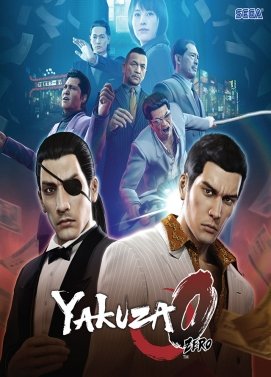
Another game I'd been putting off finishing for a long time was Yakuza 0. My original plan to get into Yakuza was to play through Yakuza Kiwami (which I did) and then follow it up with Yakuza 0, even though chronologically, Yakuza 0 comes first. My reasoning at the time was that I really wanted to have the context of having played the game that was the very first release for the series, even if this particular version of it was a remake. At the end of the day, it didn't really matter, but I will say that I was hesitant to start Yakuza 0 at first because the gameplay was so similar to Kiwami which I had recently played at the time I purchased 0. At the end of the day, what I enjoyed about Yakuza 0 had almost nothing to do with the combat and much more to do with the incredible masculine soap opera of a plot, the ridiculous minigames, and even in its more reined-in moments, genuinely emotive and sympathetic characters. I absolutely loved Yakuza 0. Playing it ensured that I would eventually play through the entire series. That will happen–one of these days.

Finished June 3rd on Nintendo 3DS.
I have slavishly played through every single entry of the Etrian Odyssey series barring remakes of the first two games. When I heard that yes, in fact, one more Etrian Odyssey game was coming, I took my 3DS out of retirement and booted it up–only to take many months to actually finish the game. I noted back in June that the 90 hours I spent with Etrian Odyssey Nexus felt interminably longer than the similar amount of time I spent on Yakuza 0. Nexus cobbled together features from all previous Etrian Odyssey games to create a pastiche. Almost every single dungeon in the game is reused and the same goes for the available character classes. On the surface, this sounded pretty incredible to me because well, it's a crossover and as I've said on numerous occasions, I love those–but in practice, assembling a new party felt repetitive because these were all classes I had used before save for the new Hero class, which mostly bored me. Similarly, the fact that every single one of the many dungeons you traverse in the game is a repeat of the past and features no new mechanics to differentiate them made me feel as if I was listening to a Greatest Hits album. I've never liked those. If Nexus had somehow taken elements of the past and elevated them and built on them, I think it could have been very successful. What happened instead is that I spent an eternity stubbornly finishing a game that I never ended up particularly enjoying.

Finished June 6th on PlayStation 4.
Finished The Knife of Dunwall on June 16th.
Finished The Brighmore Witches on June 17th.
What I did enjoy playing through, however, was Dishonored, which is the oldest game on this list so far. A very large chunk of games that I end up playing come as a result of making connections from previous games. In this case, I craved more stealth gameplay because of the taste Assassin's Creed Odyssey had given me. I wrote about how stealth tended to frustrate me when it was the only option so I decided, perhaps masochistically, to play Dishonored while pretending that stealth was the only option. Interestingly, I enjoyed playing this way a lot. I guess it makes a big difference when the game in question is built entirely around stealth instead of playing through a stealth sequence in a game in which that's not the primary focus. Blinking around environments in Dishonored was immensely satisfying and not at one moment did I regret that I never had the option to take lives. Admittedly, once I assumed the role of Daud in the DLC to the game, I started murdering people left and right, seemingly as a catharsis to assuage the tension of restraining myself all throughout the base game. This was sometimes more fun on a minute-to-minute basis, but the guilt I felt upon reaching the endgame was immeasurable. Dishonored 2 hasn't quite clicked for me yet, so maybe I need to revisit my original pacifist approach.

Finished June 10th on Nintendo Switch.
Remember when I said this year started with a desire to play more Metroidvanias? I was still feeling that way in June when I played what is quite possibly the most adorable game of the year, Gato Roboto. I really enjoyed this game for a number of reasons, but I think it served as a really nice palate cleanser for me because it was cute, accessible, not very long, and not extremely difficult. After playing some really tough games, it was nice to play something I could just relax with. It's a game about a cat in a mech suit exploring some interconnected passageways? What's not to love? Sure, it's basically Super Metroid but with cats yet its tone and simple visual style definitely worked for me. The black-and-white aesthetic reminded me a lot of Downwell, which is also an incredible game from the same publisher.

Finished June 15th on PlayStation 4.
I am an unabashed and lifelong fan of Final Fantasy Tactics and my ears will always perk up when games release that compare themselves to that title. However, I'm often disappointed by these games that draw the comparison, even when the games themselves are perfectly serviceable games on their own. Fell Seal: Arbiter's Mark is a pretty good example of this in that it could comfortably be described as a clone of Final Fantasy Tactics. A lot of the specifics are different, but the structure of the game is close to identical. I understand it's extremely difficult for an independent developer to measure up to such a lauded classic, but I can't help but be a little disappointed when "successors" like this come out. Fell Seal is a fine game, but its primary strength is its gameplay, which is copied almost entirely from Final Fantasy Tactics. There's really nothing about it that has an identity. I could definitely forgive borrowing FFT's gameplay if it also had a really engrossing story or even just really well-composed music, but neither of those things are true and it also has some really frustratingly designed missions on top of that. I discussed in detail my mixed feelings on the game here.

Finished June 24 on Nintendo Switch.
It turns out that Breath of the Wild wasn't the only Zelda game that I finished this year! I've mentioned before that I really enjoy rhythm games. I also enjoy roguelikes! Although combining the two seems an unlikely feat, Crypt of the Necrodancer did just that in 2015 and although the game is extremely difficult and frustrating, it's also very satisfying. Building on that absurd premise is the equally absurd idea that Nintendo would partner with a third-party developer to bring us Cadence of Hyrule, a Zelda-themed take on the Crypt of the Necrodancer formula. The gameplay is just as engaging as ever, but because this is a Nintendo game, I assumed Brace Yourself Games wanted to appeal to a slightly broader audience, so the difficulty is noticeably reduced compared to the first title. Although I've played all the way through Necrodancer the hard way, I definitely feel this was a good move. Necrodancer was hard to the point of being frustrating. Cadence of Hyrule is challenging but never suffocating. As before, Danny Baranowsky's dance-inflected soundtrack is incredible and he does classic Zelda tunes a lot of justice. I really enjoyed this one.

Finished July 10th on PlayStation 4.
Although I don't necessarily treat it with the same gravity as Bloodborne, Pillars of Eternity is another game that completing was a long time in coming. I started it originally back in 2015 on PC if I recall correctly and managed to make it through probably 90% of the game, including a big chunk of the expansion content. For whatever reason, while tackling some of the tougher enemies in The White March, I completely bounced off the game. The poor framerate on my PC certainly didn't help things. I always considered it a shame because I love Pillars of Eternity. This is exactly the kind of "love-letter to a classic" that I enjoy. It takes the formula from Baldur's Gate and expands and improves upon it in a number of important ways. It never feels like a straight copy of that game and has its own identity entirely separate from it. Granted, the combat can seem a little chaotic and sometimes it's not clear what each spell does in comparison to any other, but the level of customization, experimentation, and sheer breadth of options in the combat and character creation is fantastic. The plot is deep and multi-layered, the music is rich and orchestral, the characters are complex and interesting–it's just a great game. It is a great game that I have played through essentially twice, since I really was very far in the game the first time I played it. Unfortunately, the PS4 version has its share of bugs and my experience was significantly worsed in the latter parts of the game by extremely long load times. I would never recommend anyone play the PS4 version over the PC version if you had the option.

Finished on July 26th on PlayStation 4.
Heavensward finished on August 19th.
It was at this point of the year that I really settled in for the long haul with Final Fantasy XIV. I hadn't seriously played it since 2014 and at that point it had been on PC. I jumped in on PS4 and relearned the control scheme entirely. I toyed around with my old dragoon but eventually settled into playing a rogue with aspirations of becoming a ninja. I realized at that point that I hadn't even technically finished the main campaign of A Realm Reborn when I'd played it on PC, despite reaching the level cap of 50 at the time. I played all the way up to 50 as a ninja and finally picked up where I'd left off, at which point I spent a very long time doing very little else but playing Final Fantasy XIV. I can't help but recall a similar time in 2014 when my progress on games in general halted at around the same time of the year. I followed up my FFXIV obsession at that time by revisiting WoW. That didn't happen this time. I just kept playing Final Fantasy XIV.


Stormblood finished on August 30th.
Shadowbringers finished on September 23rd.
I've played a few MMOs in my time, but the ones I've spent the most time with by far are Final Fantasy XIV and World of Warcraft. I've never had anything more than a passing interest in the lore or story of WoW, but the plot of Final Fantasy XIV drew me in in a big way. It is a game that has characters I care about, sidequests that flesh out the world, political machinations that disrupt the peace of the realm, all on top of the crunchy, grindy MMO gameplay that keeps me engaged. Like any MMO, FFXIV is a game in which you repeat the same actions over and over for many, many hours. In my case, I seldom grew tired of playing ninja, a class that has a lot of tools and can do some really interesting things. Combining different mudras (symbols made through hand gestures) to cast spells while weaving in spinny-ninja combos was always fun to me and I always kept it interesting by constantly working to improve the efficiency of my rotation.

There's a lot more I could say about the three months that I played Final Fantasy XIV constantly, but this entry is going to be long enough as it is. Besides, I've already written plenty about it. The last few entries of this blog before I went on an unintentional hiatus all concern Final Fantasy XIV. Until now, I didn't recover. I guess I didn't feel as if writing about an MMO every day for months sounded very exciting.

Finished September 29th on PlayStation 4.
Although I'd been working on a few things off-and-on while playing Final Fantasy XIV, the first game to break the streak was Borderlands 3, a game that now, only a few months later, has faded almost entirely from my memory. After playing Destiny 2 earlier in the year, the gunplay felt clunky and imprecise. The mountains of loot I collected never felt exciting because I could never connect with what made any particular gun better than another, other than synergizing with the build I was going for. The game was also very buggy. A critical part of the build I had on Amara, the character I played, simply didn't work when I was playing multiplayer. Since the whole reason I wanted to play it was for co-op, this definitely left a bad taste in my mouth. This was also a melee-centric build, which never felt as smooth as I wanted it to. On top of everything else, the humor in the game felt alarmingly tone-deaf and juvenile. The game was fun on the most basic level and I don't regret finishing it, but its a game that is definitely stuck in the past and seems to even have regressed to something even less than its predecessors.

Finished on October 12th on Nintendo Switch.
The mixed feelings I have about Astral Chain have almost nothing to do with the game itself and more to do with the fact that my Switch stopped working in the middle of playing it! I ended up finishing it sometime after getting a replacement unit but the loss of momentum from switching from one console to another damaged my impression of the game somewhat. Honestly, the game is really good action game from Platinum, who have made some of my favorite action games. I absolutely love Bayonetta and I was expecting something along those lines when I played Astral Chain. It is that, but it's also a lot more. There are investigative portions in which you collect information and talk to NPCs, there are exploration sections, and a couple of spots where you ride around on a motorcycle. Those parts are cool, but I found I was having the most fun when I was roaming around wrecking enemy robots by throwing other robots at them. The combat system in this game is wild and it took me a long time to get a grasp on it. I didn't feel like I was really enjoying myself until about three-quarters into the game just because I couldn't totally grasp how to be successful at the combat system. As soon as I looked up some tips and found out that I should be regularly switching between weird robot slave weapon companion things to defeat enemies, I started consistently getting S-ranks and really enjoying myself. It's a great game for which I'd love to see a follow-up.

Finished on October 14th on PlayStation 4.
Apparently, I had decided after finishing Pillars of Eternity and forcing myself to deal with abysmally long loading times, I should follow that up with another very long PC-style Western RPG. And here's the kicker, it's one that I'd already played. I decided to play Divinity: Original Sin because although yes, I had played the game before on PC, I'd never played the Enhanced Edition and I wanted a refresher before playing Divinity: Original Sin 2 (which as of this writing I have barely played). My biggest takeaway from replaying Divinity: Original Sin is that the combat system is incredible and I will agree with opinions I've heard online that it improves on the other common combat style in isometric RPGs (like Baldur's Gate and Pillars of Eternity) by turning real-time combat with the ability to pause into straight-up turn-based strategy. What I didn't enjoy as much this time around is the story. This is partially because I've seen it before–but because I didn't have a similar problem with Pillars which I'd also already played, I think the writing just isn't as good. It's serviceable and definitely gets the job done, but I definitely didn't feel invested in any of the characters of the game. The murder mystery plot in Act 1 is really good, but it understandably loses a lot of its punch when you know the resolution of the mystery in advance.

Finished October 17th on Nintendo Switch.
I'm not entirely sure why I decided to revisit Mighty Gunvolt Burst other than an inkling that I was taking a look at the games installed on my Switch to see if there were games I still had yet to complete. This was one such example! I'm also not sure why I didn't play through it the first time since it's another Inti Creates game, the company responsible for some of my favorite Mega Man titles (primarily Mega Man Zero). Mighty Gunvolt Burst differentiates itself by giving you a lot of control over customizing what kind of shots your blaster can fire. Do you want to fire five projectiles in a fan pattern than all ricochet and then explode? Sure, you can do that! I had a lot of fun with it and it directly inspired me to play another Inti Creates game.


Finished Ace Attorney on October 23rd on Nintendo Switch.
I don't remember the first time I played Phoenix Wright: Ace Attorney but I've certainly played through the DS version more than once. I've played every (English) entry in the series so far, but the one that's most ingrained in my brain is this first one. In a lot of ways it's the most basic and lacking in mechanics, but it has a lot of charm. Despite being very familiar with the plot of this game, it felt very refreshing and comforting to return to it again. One of these days I might even play through the second and third games again too, especially since I'm curious if my lukewarm opinion of Trials and Tribulations will have changed since the first time I played it many years ago.

Finished October 25 on Nintendo Switch.
Now that I'm thinking about it, I was definitely in the mindset of finishing games that I'd bounced off of around this time, because the next game I finished was The Messenger, a game I'd started many months earlier in the year. I'd keep revisiting it, get lost, and lose interest. This was also another of those games that came about as a reaction to my renewed interest in Metroidvanias–but this one is interesting in particular because it certainly doesn't start as that kind of game at all. At first, it's a straightforward Ninja Gaiden-style action game separated into levels. Of course, after you progress through those levels, the world opens up, you unlock time travel to traverse between the 8-bit past and the 16-bit future. All of these elements are really good and I enjoyed the game overall, but I found the lack of direction the game gives you sometimes to be very frustrating. Even when getting hints from the shopkeeper, I frequently found myself with no idea of where to go. In the end, relying on guides got me through it and I enjoyed the game more as a result.

Finished October 27 on Nintendo Switch.
I originally wanted to try SteamWorld Dig in anticipation of tackling its sequel, since it was yet another title thrown into the ring when people discussed good Metroidvanias. I imagine the sequel must be a bit different, because this game reminds me more of something like Super Motherlode than Metroid or Castlevania. The primary gameplay element, as one might guess, is digging. Dig down, find minerals, bring them back, sell them, and then upgrade your equipment to become better at doing those things. Now, some of the upgrades you unlock do give you traversal abilities, so I could definitely see the sequel expanding on that. Overall, this was a fun playthrough and it only took me a couple hours to finish.

Finished October 27th on Nintendo Switch.
The other Inti Creates game I played through was Gunvolt Chronicles: Luminous Avenger iX, an unfortunately-titled game in which players assume the role of Copen, the alternate playable character from the excellent Azure Striker Gunvolt 2. I recall that when I played that game, I felt like Copen was pretty overpowered. The gameplay seems more balanced around him this time but I still didn't feel particularly challenged throughout the game–at least until the final boss which took me several tries. I think what frustrated me about this game is that it never felt crucial to vary up your strategy in order to progress. For the most part, I stuck with the same weapons throughout the game. Not a bad game, but one that I find myself forgetting even now.

Finished on November 4th on Nintendo Switch.
Another game that took me a very long time to follow up on was Fire Emblem: Three Houses. I'd felt confident that when it came out, I'd start focusing on it and completely lose interest in Final Fantasy XIV, but that's definitely not what happened. I kept playing and Three Houses fell by the wayside. When I take some time to examine why that is, I realize it's less about my obsession with Final Fantasy XIV and more about how I feel about Three Houses. I want to like it more than I actually do. Of course, I had mixed feelings about Fates as well and I can comfortably say this is a step up from those games–but there's still something missing here. The gameplay is not at all challenging and doesn't fill me with the same sense of accomplishment that Fire Emblem typically does. I also don't feel particularly invested in the characters. There are characters I like, certainly, but none that really stand out to me. I enjoy the conversations these characters have and the paths they take, but none of them really land in the way that I want them to. I was always expecting more from the game than what it gave me. It might just be that I've played far too many of these Fire Emblem games at this point.

Finished on November 11th on PlayStation 4.
Way back when I played Dishonored, I started thinking about how often I heard good things about other Bethesda-published games like Wolfenstein and Doom, but I'd never actually gotten around to playing those games, primarily because I just don't play a lot of shooters in general. However, I did play all the way through Wolfenstein: The New Order and found I thoroughly enjoyed it. The gameplay itself is solid, although frequently more challenging than I'm used to since it seems like a few stray shots are enough to take me down. I found myself fairly invested in the story too, even though a lot of the scenes were violent enough to make me a little uncomfortable. I have plans to follow this up with this game's standalone DLC prequel as well as Wolfenstein II, but so far, that has not happened.

Finished December 8th on PlayStation 4.
I'm actually shocked at how quickly I finished The Legend of Heroes: Trails of Cold Steel III. When I was originally thinking of making this list, it was easy for me to forget that I fit a 120-hour RPG in at the end of the year somehow. This game took me just as much time to finish as did Persona 5, but I guess I played in such long sessions that it seemed like it went by a lot faster. I really enjoyed this game because again, it has a lot of crossover in it since it features characters from Trails in the Sky, the Crossbell games, and of course, all of the playable characters from the first two Cold Steel games. My issues with Cold Steel III are the same as the issues I had with the first in this series in that it features a lot of lazy anime tropes and casual sexism. However, classic turn-based JRPG combat and giant robots are fun things and the bananas interconnected plot still has my attention, so I'll still be on board if NISA actually decides to localize Cold Steel IV. 

Finished December 16th on Nintendo 3DS.
I've mentioned on a few occasions throughout this entry that it took me a long time to come back and finish some of these games. Another great example is what I consider to be the swan song of my 3DS, Persona Q2: New Cinema Labyrinth. So, I loved the first Persona Q and way back in the beginning of 2015, I wrote a lengthy review of it. It was what sparked my interest in the Etrian Odyssey series in the first place and I was eagerly awaiting this sequel to recapture that magic. At first, I got nerd chills even playing the game because it brought together characters from Persona 3, 4, and 5 this time as well as going the extra mile and including the female protagonist from Persona 3 Portable. All the classic battle themes were there and I was loving it. I was so excited and felt like I'd devour the game in weeks. That didn't happen. Repeatedly, I'd go through a dungeon and the same exact themes would be explored. Embrace your individuality. Don't just go with the crowd. This would have been a fine theme to explore but the game literally does so for each of the game's five main dungeons. In addition to that, each dungeon is very light on mechanics. Any puzzles included are very simple and serve as temporary obstacles instead of an element of gameplay to be interacted with. This is pretty disappointing since the puzzles in Persona Q were pretty clever. On top of that, the gameplay is very repetitive. I think I went through basically the same actions for every single boss in the game–and when you spread that out over 80 hours, the fun really starts to ebb away. I'm glad I finished it just so I can say that I did and I don't break my streak of finishing Persona spinoffs, but I really have to say it's a disappointing farewell to a cherished handheld.

Finished December 28th on PlayStation 4.
As it turns out, I did get around to playing the 2016 reboot of Doom and although I've played no other Doom game for more than a few minutes, I really enjoyed this one! The gameplay is extremely fast-paced and satisfying. There's a good variety of weapons that have a great tactile feel and there's very little downtime between fights. On the other hand, I found myself paying very little attention to the story itself other than y'know, typical Doom stuff. You're on Mars, there's a portal to Hell. You're going to go there and you're going to fight demons. I'm on board with that. After having played through this game, I'm pretty excited for Doom Eternal. 

Finished December 28th on Xbox One (!)
I find that Slay the Spire gives me a feeling of satisfaction very similar to Dead Cells even though it's a turn-based card game. The gameplay loop of Dead Cells was based around the luck of finding different weapons and how you adapt based on that. Slay the Spire is very similar except in this case you're building a deck as you progress further through a series of levels and enemies. I love this game and before recently, I didn't even know that it came out this year (edit: for consoles)! The wide variety of cards, relics, enemy types, and challenges is more than satisfying enough to keep me coming back over and over again. I've unlocked the majority of the content this game has to offer but I'll be eagerly awaiting the news of more–or even better, news of a sequel.

Finished on December 30th on Nintendo Switch.
I just had to get one more game in before the year was done, so I powered through the very last segments of Steamworld Heist, a game I've had on the backburner for some time. I really enjoy the concept of this game because it's essentially a 2D XCOM where your squad consists of different steambot archetypes. You've got your sniper bot, assault bot, artillery, etc. The first two acts of the game were a lot of fun, but as soon as I started getting to enemies in act 3 that teleport around and put up shields that make them invulnerable, I started to really dislike what I was playing. Even so, I love the concept of the game. I just didn't love some of the enemy designs.

WHEW. That was a lot of typing.

I tend to play a lot of games that didn't necessarily come out in the year I'm playing them. This is partially out of necessity since buying a lot of new games isn't really an option for me, but also because I go on tangents with wanting to explore games that are related to each other. Having said that, these are my favorite games of 2019 (of those I've played):

5. Slay the Spire
4. Astral Chain
3. Fire Emblem: Three Houses
2. The Legend of Heroes: Trails of Cold Steel III
1. Final Fantasy XIV: Shadowbringers

On the other hand, there are games I know I'd like that I just haven't gotten around to playing yet and therefore must reserve judgment. I plan on playing Control, Death Stranding, maybe The Outer Wilds (and The Outer Worlds?), potentially Baba Is You. I haven't even played Pokemon Sword or Shield! There'll be plenty of time for that in 2020.

Wednesday, September 18, 2019

The Eorzean Prison

I think anyone stumbling across this blog by chance might have a good idea of exactly what happened to it. Suddenly, every entry is about Final Fantasy XIV and then bam, no updates for a month. Yes, it's true. I've been drawn, inextricably, to the powerful magnetic pull of this MMO. I've been playing it regularly since before I started writing about it. I haven't really taken any breaks since, despite having an earnest desire to get back to games like Fire Emblem: Three Houses, Astral Chain, or even Grandia HD or the Ace Attorney Trilogy. Those games will be played at some point, but I would have expected I'd be finished with at least a couple of those by now. No such luck.

Unfortunately, I need to send off my Switch for repair since the sound has stopped working in handheld mode, seemingly at random. There's no damage whatsoever. It's very frustrating. I've never had any issues like this with any other console I've had in the past. I'm also experiencing the "joycon drift" issue, in which the left joycon analog stick repeatedly registers phantom inputs. My initial knee-jerk reaction was to simply buy a brand new Switch, but calmer heads prevailed. The repair will cost me about $110, so it makes a lot more sense simply to take that route. It just means I'll be without my Switch for a couple of weeks. Which means I have little to distract me from Final Fantasy XIV.

The last time I updated this blog, I'd reached level 60 and had started hitting the tail end of Heavensward content. Since then, I've played through the entirety of Stormblood and Shadowbringers and now have a level 80 ninja. On top of that, I've maxed out several beast tribes. For some context, beast tribes in Final Fantasy XIV are groups that offer a series of quests that can be completed daily. Completing them regularly will award you reputation with that tribe and allow you to ascend to higher and higher ranks of recognition and unlock unique rewards at their various vendors. Maxing them out takes quite a few consecutive days of questing. Since you have the ability to do 12 of these quests a day, it's not something that can be done in just a few minutes. On average, I'd say it took anywhere from 30 minutes to an hour to complete them on a daily basis. I've done that, consistently, for the past...two months?

Over the course of that last paragraph, almost unconsciously, I started drifting into the weeds. It's difficult to discuss Final Fantasy XIV without meditating on the minutiae. It is a massive game made up of many interconnected systems and parts, parts which I've had plenty of time to dissect and analyze over the hundreds upon hundreds of hours I've spent playing it over the past few months. It's a fantastic game that I can't say enough good about, but I think it's time to move on, at least for now. There's so much game there to play that I could easily spend hundreds more hours on it, but, even without a working Switch, I have a sizable backlog of games to tackle and they are deserving of my attention. After all, it might encourage me to write more, since I'm conscious of bombarding my blog and Twitter feed with nothing but Final Fantasy XIV content.

This will be a good opportunity to revisit some games that I've abandoned along the way. Persona Q2 is a good example. It's the last gasp of a handheld on which I've played dozens and dozens of games, and I enjoy the game! There's no reason not to go the distance and actually finish it, even if it feels strange at this point to hold it in my hands after becoming so accustomed to the Switch. Then there's Divinity: Original Sin, which I'm stubbornly replaying on PS4 before playing its sequel, for reasons that are as unclear to me as I'm sure they are to you. Final Fantasy XIV won't exit my life entirely, because I'll still want to check in on it as updates drop, but I no longer want it to be the game that I sink all of my time into, every day.