Saturday, August 14, 2021

Super Robot Wars Anime Marathon #4: Cross Ange: Rondo of Angel and Dragon


By the time I started Cross Ange, I had already gotten impatient and started Super Robot Wars X, but in this case, I felt it was somewhat justified. After all, I’d already played through Super Robot Wars V in its entirety, a game in which Cross Ange made its debut. Because these games frequently cover the plots of these anime series so exhaustively, I’d already been spoiled on a lot of the crucial details of the plot.

This begs the question: Why would I be compelled to watch Cross Ange? Well, in all honesty, it’s really only because I enjoyed using Ange’s mech, Villkiss, in SRW V and planned on using it again in SRW X. I felt like it was a great design and the attacks were really fluidly animated. That opinion hasn’t changed, exactly, but watching the anime certainly didn’t improve my opinion on these characters or the world they inhabit. 


It’s worth noting that in most of the anime I’ve watched so far, I’ve had things to say about the gratuitous sexualization of female characters. A lot of mecha anime are targeted at teen boys, so it makes sense, even if it bothers me just about every time it happens. Cross Ange is particularly egregious here, though, and often in more shocking ways. Our protagonist, the titular Ange, is subjected to a pretty horrific implied rape/cavity search in the very first episode, for no real reason other than to drive home the point that her circumstances have gotten dramatically worse.


Things aren’t looking so dire for Princess Angelise when we open our story. She’s a celebrated member of the royal family in the Land of Mana, a world in which to be human is to be capable of using magic. Angelise is attended at all times by her fiercely loyal maid, Momoka, who frequently performs magic on Angelise’s behalf so she needn’t exert effort that would be beneath her. Angelise also spends a great deal of time competing in a bizarre Quidditch-like sport in which players ride flying vehicles around scoring goals on each other. She’s quite good at it, which will become important later. 


Not Quidditch


It soon becomes clear that not everyone can use magic. A scene early in the first episode shows a newly-born baby crawling through a magical pyramid barrier, much to the shock and disgust of gathered townspeople. It turns out this is proof that this child is unable to use magic and as such must be exiled from the Land of Mana. Those unable to use magic are dubbed Norma. Years of ingrained cultural tradition portray the Norma as despicably violent subhuman monsters who cannot be allowed to mingle with civilized society. Exiling these children is seen as a kindness necessary to maintain peace. Angelise, as much a product of this society as her subjects, fervently agrees. She witnesses the scene with the infant child and zealously declares that all Norma should be eradicated. From the very beginning, Angelise is a tough character to like.


Predictably, it soon becomes clear that Angelise herself is a Norma. Her brother, Julio, is quick to reveal this to the gathered citizenry. Evidently, this has been an open secret in the family for some time, but it is news even to Angelise herself. Momoka’s penchant for using magic to assist her is revealed to be a farce. Angelise had been unable to use magic all along, and we’re supposed to believe that she had never once even attempted to do so, despite it being a very normal thing for their people to do. We’re also expected to believe that she had never felt any angst or concern at the fact that she had never used magic or considered what the implications were. The alternative is that her privilege is so blindingly entrenched that she never felt the need to think about these things. Again, she is a tough character to like.


Julio
Regardless, Angelise isn’t ready to believe that Julio’s words are true, despite it becoming apparent that she cannot perform magic on command. To further drive the point home, the guards attempt to restrain her in one of those pyramid prisons, and she breaks free from that as well. To add another layer of tragedy to this story, Angelise’s mother, the Queen, throws herself in front of her daughter to protect her when she acts foolishly in front of the guards, only to be shot and killed herself. This doesn’t win Angelise any new fans. 

Angelise isn’t set to be executed, though. Her fate is the same as all Norma. She will be excommunicated from the Land of Mana and will live on the island of Arzenal, where all Norma live—and die. This is where the horrific and unnecessary cavity search scene occurs that I described earlier. It wasn’t a pleasant way to end the first episode.


What follows are a series of episodes setting up a significant chunk of the anime’s setting. Angelise—who decides to go by Ange from now on, to distance herself from her former family—soon discovers that she must now live a life of forced servitude. Her other option is to starve since the only way she can get food is to buy it. To make money, she has to hunt dragons. That’s right, the purpose of Arzenal is to fight off enormous dragons that come pouring out of the sky from arcane portals. Fortunately, the Norma of Arzenal are well-equipped to fight these dragons, as they’re outfitted with an array of combat mechs that seamlessly transform from what I could only describe as an air bike to a more traditional, sleek, humanoid figure.


Dargons.


For reasons that are initially unclear, all Norma are female. As a result, most Norma who live in Arzenal grow up only interacting with other women. It makes sense that in a setting like this, romantic relationships would still develop, and I personally think it would be weird if the anime didn’t explore that. As one might expect, though, these relationships are often framed in as lascivious a way as possible. There are bath scenes aplenty and a surprising number of sex scenes too. After the first episode featured a sexual assault, the very next episode features another assault from Zola, a superior officer in the Norma Paramail Squadron. It’s implied that this character has assaulted other members of the squad as well, and has created a weird Stockholm Syndrome dynamic in which her former conquests have become dependent upon her. This is just a gross plot point that doesn’t disappear when this character is violently slaughtered in a mishap in the following episode.


Zola, vile predator.


Speaking of violence, this anime has that in spades too. The early episodes seem to want the viewer to feel bad in as many ways as possible. Ange is the victim of two separate sexual assaults in the first two episodes, but on top of that, she inadvertently gets her mother killed. After that, she tries to escape Arzenal in one of the ParaMails when she’s still learning how to use it. As a result, one of the other rookies, entranced by Ange’s stories about the Land of Mana, gets off course as well. She is framed as a cute little girl somehow still holding onto her naivete even in the brutal conditions of Arzenal. She is dramatically torn in half by one of the dragons because the others aren’t around to protect her. Ange gets blamed for this, of course, and obviously, she doesn’t succeed in escaping. Now, Ange is hated by the people of her homeland and hated by the Norma as well. The viewers also don’t feel great about her because she spends much of the first few episodes insisting that she’s not a Norma and that she still continues to believe the Norma are subhuman garbage.


It’s hard to come back from indirectly being responsible for two squad members’ deaths, but this is a 26 episode anime, so you know things have to turn around eventually. Ange eventually distinguishes herself as an extremely skilled ParaMail rider, thanks to her previous experience in Not Quidditch. In fact, she gets so good that she ends up hogging all the dragon kills, making far more money than her fellow riders. It’s a good thing she makes so much money because one rule of the land in Arzenal is that if you’re responsible for another squad member’s death, you have to pay for their gravestone. 


During the ceremony for Zola and the other girl’s deaths, a fellow squad member laments Zola, claiming “her only flaw was her tendency to womanize.” Meanwhile, I’m thinking, “she wasn’t a womanizer, she was a rapist! There’s a difference!” 


About six episodes into the anime, we meet one of the only important male characters in the anime, who still only pops in now and then. Fellow squad member, Hilda, thought it would be funny to stuff a bunch of underwear into Ange’s mech’s exhaust… port… or whatever, which results in an unexpected crash landing during a routine expedition. She ends up marooned on an island, where she meets Tusk.


Hilda the Grump
Now, Tusk is framed as a nice guy who happens to be a great mechanic, but much of the “humor” surrounding his characterization is due to his unwanted sexual advances, even if these advances are frequently portrayed as accidental. I’m of the opinion that he knows what he’s doing at every step of the way but feigns innocence to get away with it. For example, the day Ange awakens on the island, she’s been stripped of all her clothes, and Tusk, a stranger, is sleeping in the same bed with her. There’s no way to explain this away as anything approaching appropriate. Throughout the anime, there are pratfalls in which Tusk somehow ends up with his face buried completely in Ange’s crotch. This happens over and over. And over. Here’s a choice quote from their first meeting when Ange expresses her feelings that Tusk is some kind of pervert. 


“Do I really look like the kind of guy who’d take advantage of a girl? To feel up her ample, well-shaped breasts while she’s unconscious? To enjoy her unresisting flesh every which way? To explore the most intimate secrets of the female body? Do I really look like that kind of guy?!”


Tusk with big fuck boy energy.


Yes. You do.


I could rant all day about how annoying and gross the sexual content of the anime is, about how unnecessarily violent and gory the anime is for no real gain, but it’s worth talking about the things I do like. On the surface, the premise of the anime is interesting. I like the broad strokes of Norma being exiled from human society and their mandated struggle against the mysterious invading dragons. I like the idea of Ange coming into Arzenal as a teenager when the other Norma have been in Arzenal since birth. It does create an interesting dynamic between the characters. Unfortunately, none of the characters ever end up being very likable. Ange is arrogant, annoying, and selfish for a good chunk of the anime, only to evolve into a generic protagonist that still somehow manages to be a damsel in distress on many occasions. 


There is less emphasis on the other members of the squad, but a few of them do have moments of character development. Salia is appointed leader of the ParaMail squadron after Zola’s timely demise, but her character arc mostly amounts to her feeling inadequate for not being the Chosen Hero she always expected to be. She feels Ange, an outsider, is the one getting all the glory, and she can’t reconcile that with how she feels about herself.


Salia


Hilda is the one most affected by Zola’s death and feels she should take it upon herself to follow in her despicable footsteps. As a result, she spends a significant chunk of the series being a huge bully. Her only redeeming traits come after she dares to hope for more than what can be found in Arzenal, only to have those hopes dashed.


Jill


Rounding out the squad are Vivian, Rosalie, Ersha, Chris, and Jill, all of whom mostly fade into the background. Vivian frequently serves as a comic relief character who springs nonsensical “pop quiz” questions on others. Rosalie and Chris essentially serve as members of a polyamorous relationship with Hilda, but only have important character moments very late in the anime. Ersha is a mother figure that similarly only becomes more important later on. Jill is the de facto leader of Arzenal, but her importance beyond this fact isn’t clear initially.


Most of the cast, including Rosalie, Chris, Ersha, and Vivian from the left.

Cross Ange becomes much more than the story of Arzenal and the defense against dragons in the anime’s second half, but I also feel this is the point where the story really falls apart. An omnipotent villain is introduced and despite a principal plot point of the anime being dragons, the story becomes significantly less grounded and more sci-fi. Although there were a lot of things along the way that repelled me before this point, this was the part of the anime where I no longer really resonated with the story, and that didn’t change at any point on the way to the finish line.


What’s framed as an interesting twist is really just nonsensical at the end of the day. The extreme power of the villain is also disconcerting because it’s not clear at any point why this villain doesn’t utterly destroy everything in his way. I’ve never liked villains like this. Just as heroes with no weaknesses aren’t interesting, neither are villains without weaknesses. As a result, any effort to defeat or destroy this villain ends up being a series of convoluted contrivances. Cross Ange is no different in this regard.


Ultimately, Cross Ange is a bizarre and often disturbing anime that frequently made me uncomfortable. There’s a skeleton of an interesting premise in there but I couldn’t recommend that anyone slog through it just to experience it. Play the Super Robot Wars games in which they feature and you’ll have a much better experience than actually watching the anime.


Cross Ange in Super Robot Wars V and Super Robot Wars X

I used the following units in Super Robot Wars V.

Villkiss - Ange


I used the following units in Super Robot Wars X.

Villkiss - Ange

Enryugo - Salamindinay


Both of these games feature a whole lot more of the ParaMails from this anime and although I experimented with some of them, I found that I didn’t feel it necessary to slot in any more of those units. I had briefly considered using more from Cross Ange in Super Robot Wars X, but after actually watching the anime, I quickly changed my mind. Having said that, Villkiss was a powerhouse in SRW V and one of my best units, but it didn’t quite rise to the top in SRW V, even though it remained a solidly reliable choice. Salamindinay is a character I didn’t even get around to since she mostly features in the anime’s second half, but her red ParaMail was often useful in SRW X due to its extremely long range. I don’t have too much more to say about them than that, but I can say that the SRW adaptation of the Cross Ange story is significantly less disturbing than the anime’s variant. Again, I can absolutely recommend skipping this anime.

Saturday, August 7, 2021

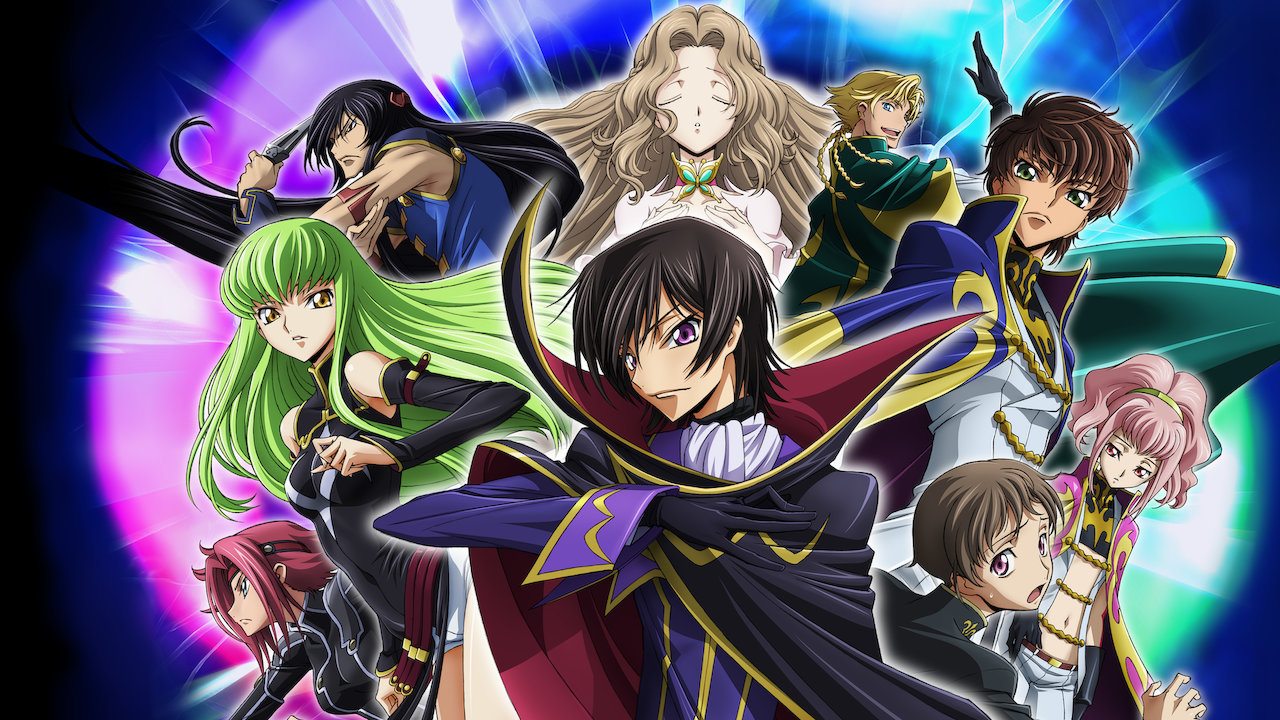
Super Robot Wars Anime Marathon #3: Code Geass


I’ve always struggled with my attention span, so when I started a 50-episode anime with the intention of getting through it as quickly as possible, I was skeptical I could make it all the way through. Somehow, though, I did! I think the last time I was able to do that was with Eureka Seven (which is one I need to rewatch, actually). Every other anime I’ve watched has been shorter or I’ve watched them out of order on Toonami as a kid.


I’m not certain I can say my willingness to finish the show is a testament to its quality, though. I did like this anime, but I also had my problems with it. I think what is principal among my problems with Code Geass is its protagonist. Lelouch is not a likable guy, and maybe he’s not really meant to be. The question is whether the anime really pulls it off. I can only think of Breaking Bad as a comparison, which is a fantastic show about a really terrible guy. I think the crucial difference is that we remain grounded in that show’s story due to the journey Walt takes from being a reasonably moral, disgruntled Chemistry teacher to a despicable villain. Lelouch, on the other hand, is kind of an annoying jerk from the very beginning and he only really gets worse as the series goes on.


Lelouch

The very first episode shows us what kind of person Lelouch is. He’s very clever and isn’t shy about showing that off. He repeatedly dominates others in competitive chess matches despite the fact that he’s just a high school student. It’s clear that he’s bored by everyday life and finds joy in solving puzzles and lording his intellect over others.

It’s worth noting that the setting of Code Geass takes place in a fictionalized Japan called Area 11. An enormous nation called Britannia has taken control of about one third of the entire Earth at this point and has stripped the Japanese of any true nationality. Natives are called “11s” and the Britannians do everything they can to quash any claim to Japanese culture or even the right to self-identify as Japanese. Lelouch gets mixed up in a Japanese resistance movement quite by accident. He’s involved in a collision in the first episode and ends up scrambling right into a cargo truck driven by two rebels, one of which is Kallen, an important character that we’ll meet later. After the wreck, the drivers quickly regain their bearings and peel out, as they’re evidently being pursued by a Britannian helicopter. The Britannians are quite intent on stopping the rebels because they fire several missiles during the chase. When they finally catch up, the truck topples over, releasing what you might assume is a canister of poison gas, but instead contains a mysterious girl by the name of C.C. (pronounced “C-Two”). 


C.C.

Lelouch isn’t able to revive the girl, but he doesn’t have much time to think about it when a group of Britannian soldiers shows up, ready to execute who they believe to be an Area 11 rebel. Conveniently, one of the soldiers is Suzaku, Lelouch’s childhood friend, who can vouch for him. Because Britannia is often framed as explicitly evil, the soldiers don’t much care one way or another. After the uninjured driver (Kallen) self-destructs the vehicle, it’s not clear who is able to escape the blast. Shortly after, though, Lelouch finds himself accosted by whoever is remaining from the soldiers, more eager than ever before to kill Lelouch, Britannian or not. It’s at this point that the title of the anime comes to the fore, as the green-haired girl from the canister appears in Lelouch’s thoughts and offers him a “Geass” to get him out of this situation. Lelouch accepts since he has little other choice. A glowing sigil appears on his left eye, and he finds that he’s able to order the soldiers to do whatever he wishes. He promptly orders the soldiers to shoot themselves in the head and they quickly comply.

Right from the very beginning, it’s established that Lelouch doesn’t much care what he has to do to get his way. He could have just asked the soldiers to leave, but he had them kill themselves. His lack of mercy continues to be a theme in the series. 


You could make the argument that power can corrupt people, but it seems clear from the outset that Lelouch was always corrupt. It doesn’t take long at all for Lelouch, freshly commandeered mech in tow, to assume de facto control of a ragtag group of resistance fighters. His unparalleled genius lends him tactical combat skills that he doesn’t seem at all surprised he has. With his excellent directions, he quickly gains support from the resistance, even though none of them even know who he is. To complete the illusion, Lelouch dons a dark mask and takes on the moniker of Zero, which he then uses to address his followers and those he wishes to control. At every turn, Lelouch relishes the opportunity to be a mysterious and dramatic revolutionary, despite the fact that he should realistically have no stake in Japanese independence.


As it turns out, Lelouch has a much simpler motivation for wanting to rebel against Britannia and its royal family. He’s a member of it. Lelouch vi Britannia is an exiled prince of the Britannian royal family, living with his sister, Nunnally. Both have been presumed dead for many years, but it’s not clear how they’ve been able to participate in Area 11 society without raising any eyebrows. After all, Lelouch has assumed a new last name (Lamperouge), but has chosen to keep his unique first name. Surely, someone should have recognized him at some point?


Nunnally

Ten years before the anime began, Lelouch’s mother was murdered, although the culprit of that murder is unclear. Lelouch believes the royal family did not do enough to investigate the circumstances and as such holds them partially responsible for it. The attack also severely injured Nunnally, who was a very small child at the time. The injuries were enough to make her lose her sight and ability to walk. In what is Lelouch’s only real sign of humanity throughout the course of the anime, he devotes himself to making sure all of Nunnaly’s needs are met, even as his new responsibilities as a mysterious revolutionary begin to dominate his time.


Throughout the course of the anime, Lelouch is required to juggle the responsibilities of being a normal high school student where he proves that his skill at deception extends beyond his Geass. He lies to everyone around him, regardless of whether he’s wearing the mask of Zero or not. His supporters in the resistance don’t know his identity nor his nationality. His classmates don’t view him as anyone special. In fact, Kallen Kozuki is a member of the resistance and one of his classmates and she has no idea that her classmate is the mysterious masked figure giving her orders when she moonlights as a member of the resistance.


Lelouch as Zero

Early on, Lelouch learns that his Geass does have limitations. He must make eye contact with his victim, and once he’s used this power, he cannot use it on the same person again. Even so, the effect of its power is almost unlimited. At one point, he commands another character not to die, a command that can apparently never wear off. Regardless of the risks to others, this character will stop at nothing to make sure he survives. This is just one example of Lelouch being unable to foresee the potential consequences of his commands, but far from the only one. Under most circumstances, Lelouch will sacrifice anything and anyone to make sure his desires are granted, except for when it comes to his sister, Nunnally. Her protection is the most important thing to him of all, and he repeatedly tells himself that everything he’s doing in the resistance is to create a world that would be better for Nunnaly to live in. Like most villains, Lelouch is deluding himself.


Suffice to say, the anime gets much more complicated from there. Even devoting this amount of text to it only covers the most basic outline of the show’s premise, and we’re talking about a 50-episode anime in which a lot happens. The story is very interesting and occasionally clever, but what I found repeatedly frustrating is the motivations of the principal characters, Lelouch and Suzaku. Lelouch considers himself an antihero, even though he repeatedly and self-indulgently wallows in the “darkness in his soul.” At every moment, he’s the guy who’s moving pieces on a game board, with little concern for the humanity of the various pieces he manipulates. On the other hand, Suzaku is virtuous to a fault, or at least he believes himself to be. Despite being childhood friends with Lelouch, Suzaku is really his perfect foil. Lelouch is Britannian and Suzaku is Japanese. Despite this, Suzaku has rejected his nationality and become an honorary Britannian, determined to create peace by “not rocking the boat.” He is the perfect encapsulation of a miserable centrist. Peace cannot be created by violence, in his estimation, but only by upholding the status quo. He’s basically a cop, just as unlikable as Lelouch but in an entirely different way.


Suzaku


Some of the supporting characters are arguably more likable but get much less screen time. Kallen is a member of the resistance movement and truly seems to have her heart in the right place. She’s willing to get her hands dirty but isn’t as bloodthirsty and as much an adherent to “the ends justify the means” philosophy. Lelouch, by contrast, is an amoral tactician, only willing to exercise diplomacy and mercy when it will garner him more support, never to satisfy his own moral compass. Kallen’s primary role in the resistance is being what is essentially their ace pilot the fearsome Guren Mk. II, a mech that seems to function by grabbing onto enemy mechs and melting off their armor plating. Suzaku plays a similar role for Britannia in his radiant white mech, Lancelot, as appropriate a symbol for how Suzaku views himself as one could imagine. Lelouch is typically in a mech as well. Although he eventually ends up with an extremely powerful machine later on, he spends most of his time on the sidelines, exercising his role as the tactical genius giving directions to his minions. 


Kallen

Unfortunately, since Kallen is an important female character in an anime targeted at teen boys, she also gets sexually objectified frequently. Unlike some anime where nudity is suggested or implied, Kallen has several scenes in which she just so happens to be completely nude. These are deliberate choices that bother me just as much as the kind of casual nudity you see in a Game of Thrones episode. It’s not a huge part of the show, but it happened often enough that it bothered me.


Many of Lelouch’s classmates are also sympathetic, and it can be frustrating seeing them interact with a brutal liar on a regular basis. There are several instances where Lelouch is directly responsible for these innocent students coming to harm. Lelouch does demonstrate guilt at many points throughout the anime, but never enough to lose sight of his goal of overthrowing Britannia. In his mind, any sacrifices others must make in service of his goal are acceptable, as long as it creates a world in which Nunnally can leave peacefully and, frankly, so he has the opportunity to find out why his mother was killed. 


As one might imagine, it can be frustrating following the events of two main characters who are ultimately very selfish people deluding themselves. Even though I liked the anime, I always felt like there were ways this could have been done better. Lelouch ends up killing a lot of people unnecessarily, which would have been a nice twist to a character that devolves into something darker over time, but this is a dark character with twisted motivations from the beginning. He never seems to grow into something better or even just different in any interesting way, at least not nearly enough for it to improve how I feel about the character and the anime as a whole.


Code Geass in Super Robot Wars X


I used the following units from Code Geass in SRWX.

Shinkiro - Lelouch

Guren S.E.I.T.E.N - Kallen

Lancelot Albion - Suzaku

Lancelot Frontier - C.C.


The Code Geass units were definitely kind of my second-string fighters. This is for a few reasons. First of all, you get them somewhat late in the game. This would be fine, except SRWX only covers the second season of the anime, which means that any development these characters are going to do has really already happened. At no point do these mechs or characters upgrade or evolve at any time. This makes it a little harder for me to be invested in them, even though the units are fairly strong from the outset. I do think it was nice that they reference Lelouch’s tactical abilities by giving him the ability to boost allies’ stats in combat, which is not an ability I’ve seen any other character in an SRW title have. There are also a few more Code Geass units available that I didn’t end up using, if only because my roster was pretty stacked already. I will say that C.C was instrumental to my victory in many maps because she had a fantastic list of Spirit Commands, including Daunt (lowers enemy Will) and Prospect (restores ally SP).

Monday, August 2, 2021

Super Robot Wars Anime Marathon #2: Gurren Lagann


Unlike most anime featured in Super Robot Wars, I’d actually watched a little of Gurren Lagann before playing a game in which it features. This was quite a few years ago, though, and I’d only made it about halfway through the series. I remember having problems with the pacing and oversexualization of some of the show’s characters, particularly Yoko. Well, those complaints are still here, but at least I didn’t have as many issues with the pacing this time around.

To its credit, Gurren Lagann has a really interesting premise from the outset. Protagonists Simon and Kamina live in an underground society of diggers. Simon in particular spends his days digging tunnels, looking for resources. He is the meek foil to Kamina’s brash fearlessness—and stupidity. Still, Kamina’s dogged refusal to back down from even the most dangerous of threats is part of what attracts people to him. He’s a natural leader, even as he vehemently denies the authority of their little community’s nasty village chief.

Kamina’s ambitions to reach and explore the surface very quickly come to the forefront when the sky opens up Jiha Village’s cavernous depths, bathing their home in sunlight. My first thought when this happened was that the residents of Jiha Village would almost certainly be blinded by that light, but I can forgive that the anime never addresses this. More pressing is the absurd giant robot that is responsible for breaking through into their village. It’s a weird, monstrous but otherwise humanoid mechanical thing. Soon after, we’re introduced to Yoko, a scantily clad sniper ostensibly from the surface. She’s been around the block a time or two when it comes to these giant Gunmen, but Kamina, his lack of experience notwithstanding, feels secure in challenging the thing face to face. This is in spite of the fact that he’s about 1/100th of its size.


Honestly, Yoko is a great character throughout the series. She’s thoughtful, smart, and caring to her newfound friends, but because this is an anime targeted at teen boys, she is relentlessly sexualized almost every time she’s on screen. Her initial outfit—basically just a bra and shorts—would almost be understandable given the oppressive heat of the desert surface, but the way she is framed and the situations the anime forces her into always lean into the lewd. Like, I know this is absolutely not out of the ordinary for anime, but it just always strikes me as so annoying and unnecessary. How many scenes do we need of Simon’s little hamster pet burrowing into Yoko’s boobs or Simon face planting into Yoko’s boobs or Yoko squeezing through narrow hallways, struggling to contain her boobs? All of this happens in the first episode just so we’re clear. Another thing to make clear is that Yoko is canonically 14 in this part of the story. This doesn’t make sense given the implied older sister/younger brother dynamic between Simon and Yoko (Simon’s also 14), but this is supposed to be her canon age. This makes Yoko’s extreme sexualization even creepier in this context.


Yoko


It’s probably clear that I don’t watch a lot of anime given how much I have to say about what is likely extremely routine pandering in this genre. Even so, it’s worth mentioning, because it does sour the experience of an anime that is otherwise about friendship, living up to your potential, and ludicrous giant robot fights, sometimes in space. 


Anyway, it turns out that the Gunmen are piloted by Beastmen that occupy the surface. Even Yoko originally hails from another underground village by the name of Littner. These Beastmen aren't big fans of Kamina's little group trespassing on the surface, but apparently, Yoko and her comrades regularly do combat with them over resources, using weapons they looted from Littner's buried cache. As it turns out, Kamina is the first person stupid enough to try commandeering one of the enemy Gunmen and is shockingly successful in doing so. Combined with the Big Robot Head Simon found while digging tunnels, Simon and Kamina now have a full-fledged super robot, the titular Gurren Lagann. These early episodes with Simon and Kamina figuring out how the robot works and performing manly combo attacks are pretty special and what I remember the most when thinking about this story.


I think I fell off on this anime the first time because I really enjoyed the first half a lot more than the second. This is probably still true today because I don’t think it’s too much of a spoiler to say that there’s a time skip about halfway through where the tone noticeably shifts. Simon and company age up about seven years in the interim and as one might expect, a lot happens offscreen. This does kill the story's momentum a bit and it becomes disorienting to make sense of how previously familiar characters have developed over time. Several principal characters’ personalities have noticeably shifted, but because we're not a part of that transformation happening in real time, it can be more difficult to parse. Even so, you can see how the seeds were sown for some of these developments. For example, an early episode has Simon and Kamina’s absurdly heavy, pilfered Gunmen falling into yet another underground society This village’s resources are much more limited than that of Simon and Kamina’s Jiha Village. As a result, the Village Chief has decreed that only 50 people may live in the village at any given time, with extras to be exiled to the surface. A long-abandoned Gunmen’s head adorns the central chamber of the village, worshiped by the inhabitants as a god. The village chief encourages this behavior and uses it as a tool to foster obedience from his subjects.


Rossiu

After Simon, Kamina, and Yoko drop in and disrupt their cultural norms, one thing leads to another and one of the village inhabitants by the name of Rossiu ends up agreeing to leave with two exiled orphan siblings called Gimmy and Darry. Naturally, they all come along with the Gurren Lagann team. After his introduction, Rossiu has very little to do in the show’s first half, despite taking a few turns at being Simon’s Gurren Lagann co-pilot. In the second half, his fanatical pseudo-religious upbringing comes to the fore, transforming a previously kind, generous boy into a taciturn bureaucrat in service of Simon, who now essentially governs the free world of the surface. It’s clear that Simon’s adventurous spirit doesn’t necessarily gel with his new leadership role, nor does it feel appropriate for many of his appointed advisors, all former Gurren Lagann team members. The new role seems to fit Rossiu like a glove, though, and of course, this conflict becomes an important part of this new arc. This is fine and all, but it’s not an arc I personally found to be as engaging as the starry-eyed adventure of the first half.


This is not to say that the first half doesn't have its problems, of course. A significant chunk of its runtime involves being attacked by a rogues gallery of extremely forgettable villains. This is nothing out of the ordinary for stories like these, but the old trope of sending off a string of incompetent henchmen until they're all defeated has been going since probably the 70s. Of course, one of these henchmen deals a crippling blow to the crew that also struck me as a bit of a momentum killer the first time I watched the series. It happens early enough that I'm hesitant to even call it a spoiler, but I'll refrain from divulging further even so.


Another point that I feel is necessary to address is the character, Viral. Viral is another one of the Big Bad's henchmen during the first half, and despite failing repeatedly to vanquish the Gurren Lagann crew, continues to lick his wounds and return after begging forgiveness for his transgressions. It feels like the anime wants you to care about this character's arc, but I never did. He's a Beastman, but like many other important Beastman characters, he's really just a human with some sharp teeth and other vaguely beastly features. The grunts, on the other hand, are birds and apes and fluffballs that barely resemble humans. The only real character arc Viral has is that he repeatedly loses against Kamina and later Simon in combat. He starts to consider it a point of honor to defeat his rival but never ends up being as strong a force as he hopes. You can probably predict where this arc eventually goes.


Viral


Although the first bits of the time skip drag, things start to get extremely ridiculous again in the final string of episodes, where the scale of Giant Action Robot stuff increases exponentially. As a nice bonus, the young orphans from the very beginning of the anime are now young adults piloting their own mechs! There are long-awaited character returns, redemptions aplenty, and some epic sacrifices as well, both before and after the action is done. Overall, it’s an exciting and enjoyable conclusion to a pretty solid anime, even though it's far from perfect.


Gurren Lagann in Super Robot Wars X


I used the following units from Gurren Lagann in SRW X.


Gurren Lagann - Simon/Viral

Super Galaxy Dai-Gurren - Daiyaka

Space Gunmarl - Gimmy

Space Gunmarl - Darry

Space Yoko W-Tank - Yoko


Due to the ridiculous and over-the-top nature of the mechs from Gurren Lagann, it makes sense that a lot of them aren’t available until the very latter stages of the game. As a result,  my only Gurren Lagann unit for more than 3/4ths of the game was Simon himself in the base version of the titular Gunman. That isn’t to say he wasn’t powerful, because he definitely was, but I wish I could have spent more time with some of the other characters. The amount of time they give you isn’t really enough to feel like they’re truly a part of the squad, even though the fantastic animations you get with the colossal Giant Space Mechs near the end were more than worth the wait.